Anatomy
Cranial nerves are paired and there are twelve pairs in all. They originate in the brain stem, with one exception, that being part of the spinal accessory nerve (Cranial Nerve X) which originates in the upper cervical spinal cord.
Cranial nerves have both motor and sensory functions and most have mixed functions i.e. both motor and sensory. Cells that have motor function originate in nuclei deep in the brain stem while those with sensory functions originate in ganglia (a collection of neurons) lying outside of the brain stem. This arrangement of the nerves is similar for the spinal nerves originating from the spinal cord. Spinal motor nerves originate within the cord substance itself, whereas sensory spinal nerves originate in the dorsal root ganglia outside the spinal cord.
The nerves are designated by Roman numerals and are named after the structures they innervate e.g. facial nerve or by their principle function e.g. olfactory nerve.
Cranial Nerve I (Olfactory)
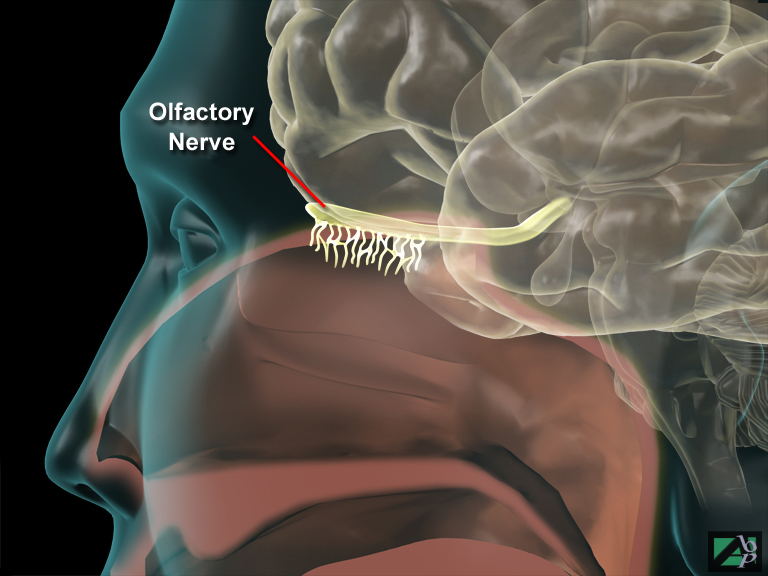
Cranial nerve I is the olfactory nerve. It serves purely sensory functions. Actually, it is not a nerve per-se but rather a sensory fiber tract that relays sensory impulses of smell from the mucous membranes within the nasal cavity. The nerve tract functions as chemoreceptors that respond to chemical particles breathed into the nasal cavity. Sensory reactions are passed along this olfactory tract to the primary olfactory area in the cerebral cortex for dissemination and recognition.
Cranial Nerve II (Optic)
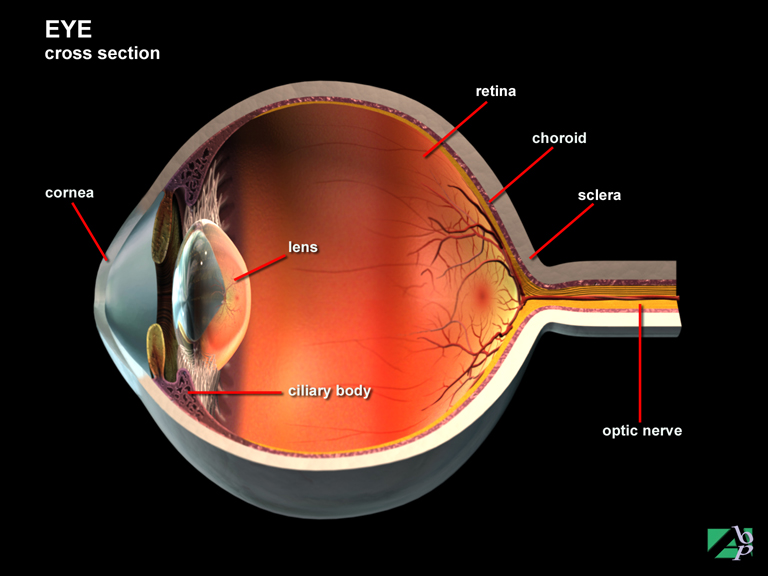
Cranial nerve II is the optic nerve. It is purely a sensory nerve comprising an estimated 1.2 million nerve fibers. It conducts impulses from the rods and cones of the retina in the eye along what is known as the optic chiasma (near the pituitary in the floor of the diencephalon) then through optic tracts to the thalamus then to the visual cortex of the occipital lobes.
Cranial Nerve III (Oculomotor)
The oculomotor nerve is primarily a motor nerve that innervates muscles of the eyeball and muscles of the iris of the eye to initiate pupil dilation. It also innervates muscles within the ciliary body of the eye to produce lens accommodation (spontaneous adjustment of the eye to focus on near and distant objects).
Cranial Nerve IV (Trochlear)
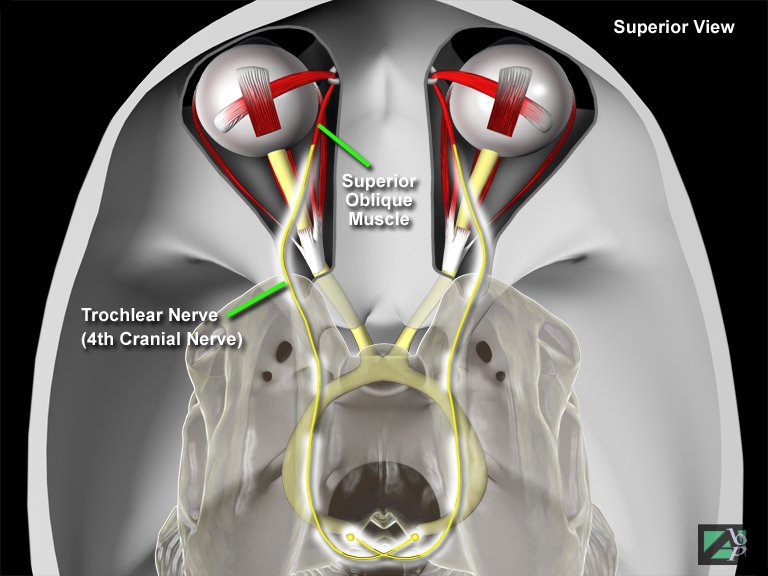
The trochlear nerve is a mixed nerve (motor and sensory functions) that innervates the superior oblique muscle of the eyeball that permits downward rotation of the eyeball.
Cranial Nerve V (Trigeminal)
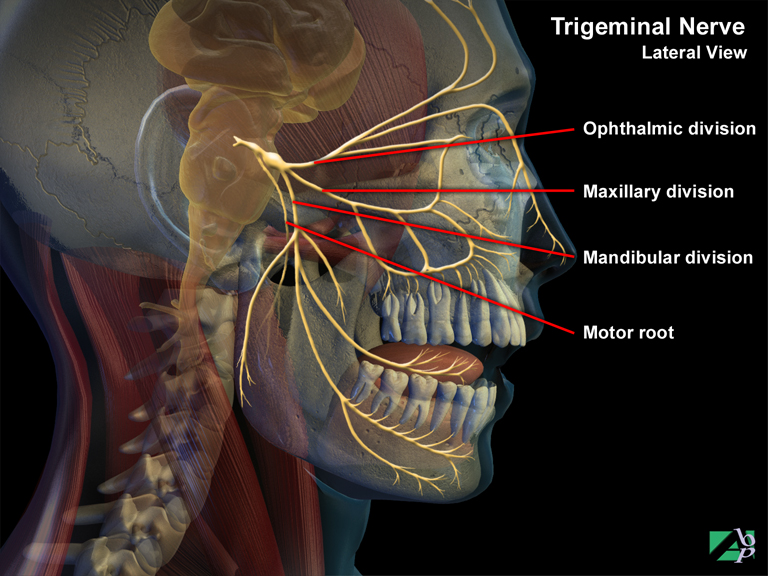
This is a large mixed nerve that has three branches: the ophthalmic branch, maxillary branch and mandibular branch. Although it is a mixed nerve its sensory functions are much more extensive than its motor functions.
The motor fibers of the trigeminal nerve are found in the mandibular branch that innervates mouth muscles used in mastication and also other muscles on the floor of the mouth. The sensory fibers of the mandibular branch respond to sensation from the teeth and gums of the lower jaw, parts of the tongue, auricle of the ear and lower part of the face. The ophthalmic sensory branch has sensory fibersthat respond to touch, temperature and pain from the anterior half of the scalp, skin of the forehead, upper eyelid, surface of the eyeball, and side of the nose. The maxillary branch responds to sensation from the lower eyelid, palate, a portion of the pharynx and the teeth and gums of the upper jaw.
Cranial Nerve VI (Abducens Nerve)
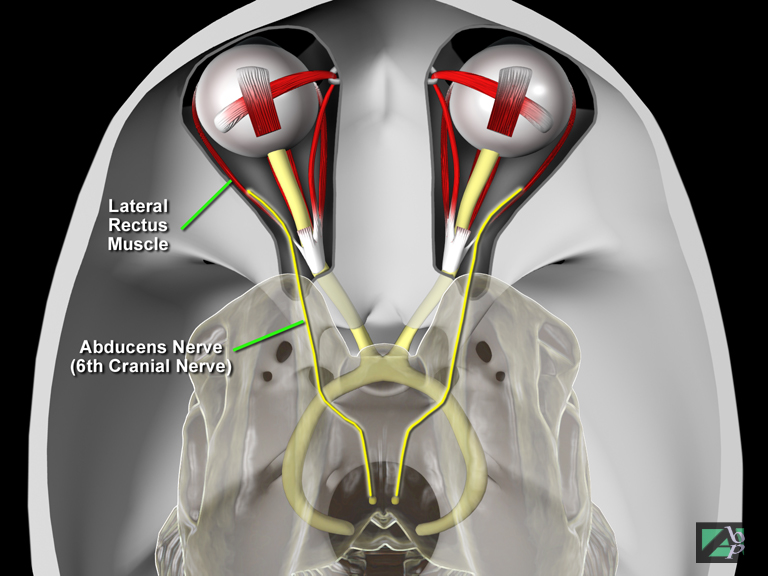
This is a mixed nerve (sensory and motor) that innervates the lateral rectus eye muscle that causes the eyeball to rotate laterally (to the side).
Cranial Nerve VII (Facial)
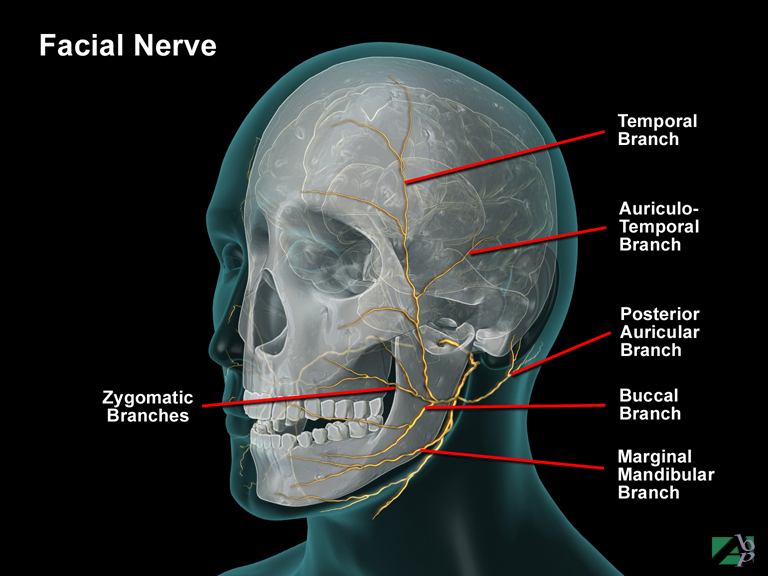
The facial nerve is also a mixed nerve. The motor fibers innervate the facial muscles and scalp muscles. Sensory fibersof this nerve supply the sense of taste.
Cranial Nerve VIII (Auditory)
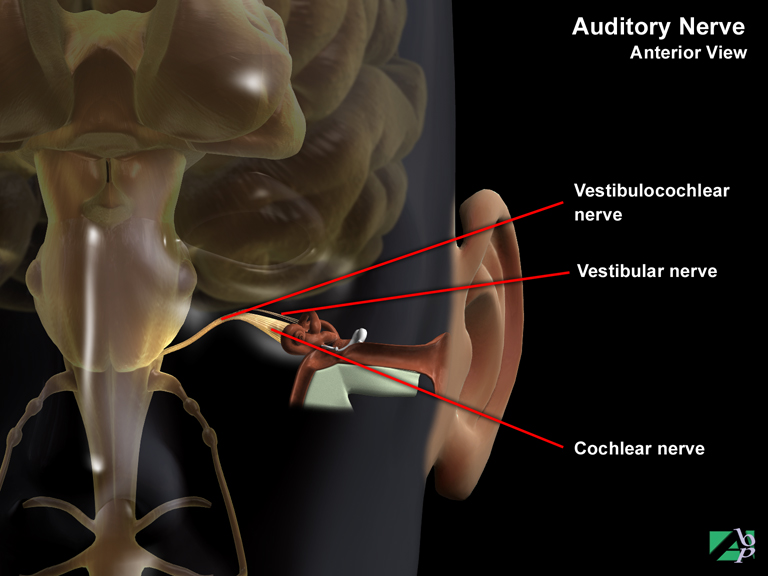
The acoustic nerve, also known as the vestibulo-ocular nerve is a mixed or composite sensory nerve. It comprises two branches that arise within the inner ear. These are the cochlear division for hearing and the vestibular division for equilibrium and balance.
Cranial Nerve IX (Glossopharyngeal)
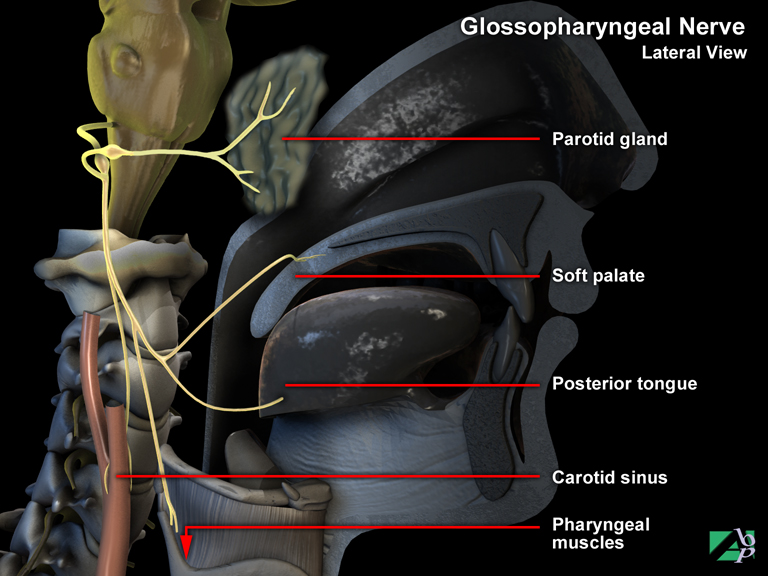
The glossopharyngeal nerve is a mixed sensory and motor nerve that innervates part of the tongue and pharynx. The motor fibers innervate the muscles of the pharynx and the salivary gland to stimulate the swallowing reflex and secretion of saliva. The sensory fibersprovide the sensation of taste for bitter and sour taste perception.
Cranial Nerve X (Vagus)
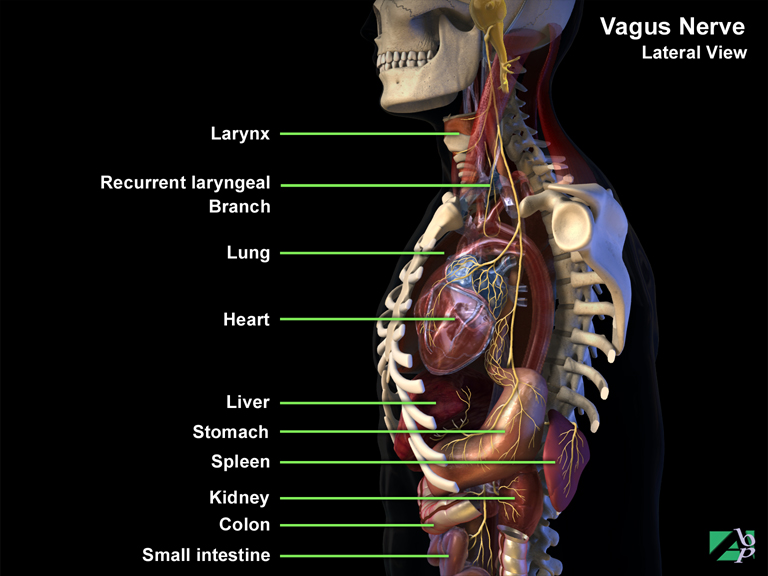
The vagus nerve is also a mixed sensory and motor nerve with an important parasympathetic division to thoracic and abdominal viscera. Through various branches it innervates the muscles of the pharynx, larynx, respiratory tract, lungs, heart, esophagus and some abdominal viscera. One branch of the nerve, the recurrent laryngeal nerve, enables speech.
Cranial Nerve XI (Accessory)
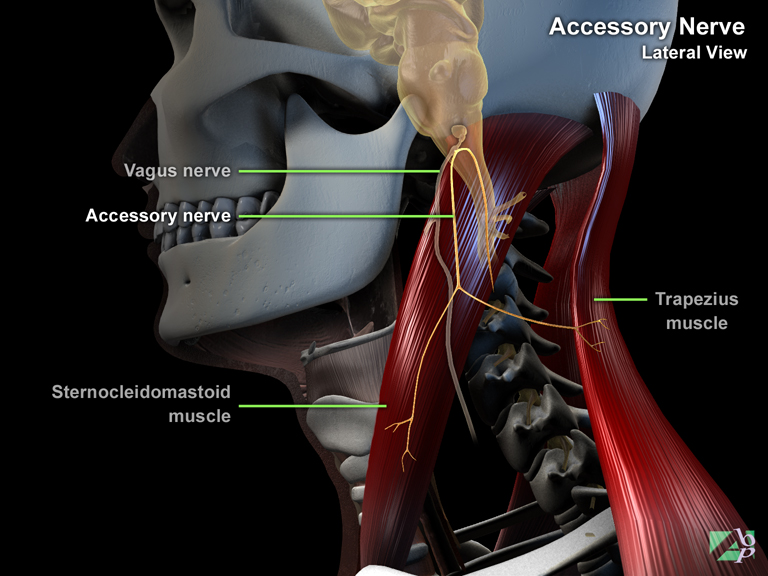
The accessory nerve is primarily a motor nerve though it does have some sensory fibers. This nerve is unique among the cranial nerves in that it has its origins both in the brain and the spinal cord. The cranial motor fibersinnervate the skeletal muscles of the palate, pharynx and larynx. The spinal motor fibersof the accessory nerve innervate the muscles that move the head, neck and shoulders.
Cranial Nerve XII (Hypoglossal)
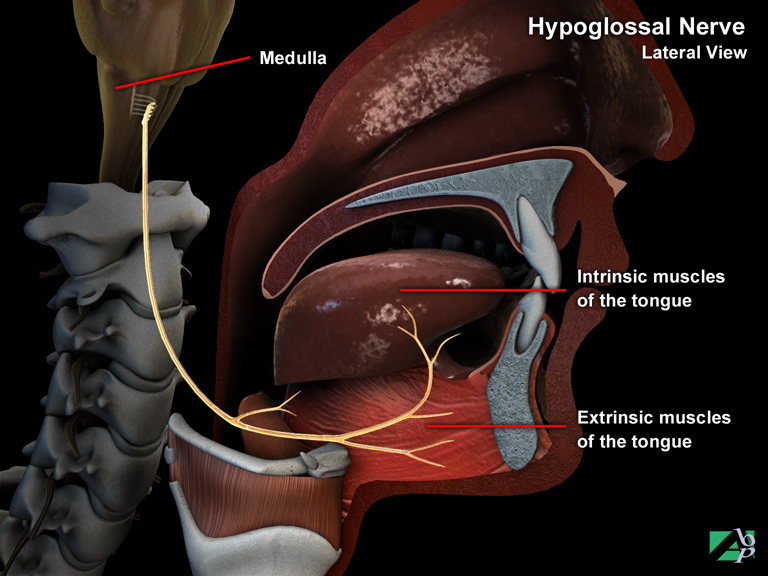
The hypoglossal nerve is a mixed nerve with both motor and sensory fibers. The motor fibersinnervate tongue muscles while the sensory fibersmonitor the position and function of the muscles.