Retina
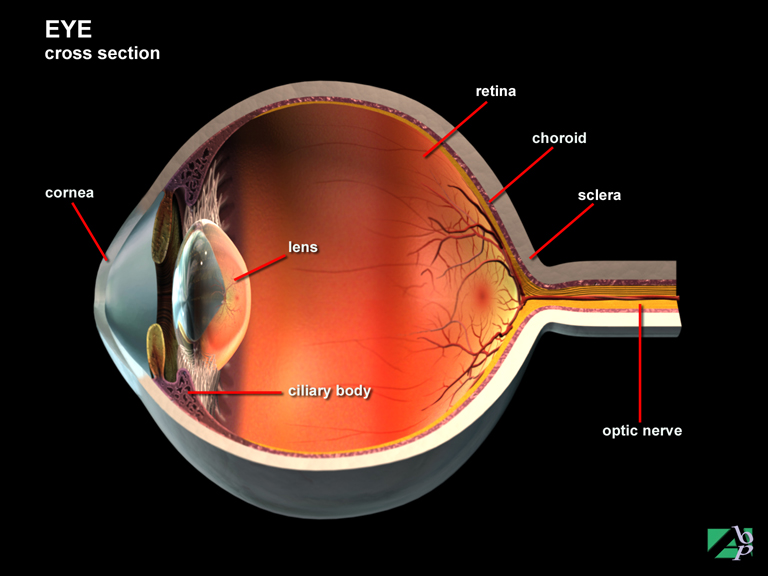
The retina, which covers the choroid, is the inner neural layer of the eye. It comprises two portions, an outer-pigmented layer and a neural layer. The two layers are not attached to each other except at two points. Because of this loose connection the retina may become detached. In the center of the outer layer is the macula, which is vital for clear vision. The all-important neural layer is composed of many varied nerve cells and photoreceptors (cone- and rod-shaped components sensitive to light stimulation). The information gathered by the photoreceptors is integrated into a visual message conveyed by the optic nerve to the brain. Rods are located in the peripheral parts of the retina and respond to dim light for black and white vision. They also respond to shape and movement but do not provide good visual acuity. The cones are located near the center of the retina (the macula) and respond to daylight color vision and are responsible for visual acuity