Medical Glossary - Letter A
This is a medical glossary of terms beginning with the letter "A" containing only the more common medical terms one might expect to encounter in a medical report or in hospital notes. The glossary is intended as a quick reference only; many of the terms are also referenced and illustrated in more detail in the medical libraries, to which you should refer for more detailed information.
Abdomen
The area of the trunk (torso) between the diaphragm (chest) and the pelvis
Abdominal
Pertaining to or referring to the abdomen
Abdominal Aorta
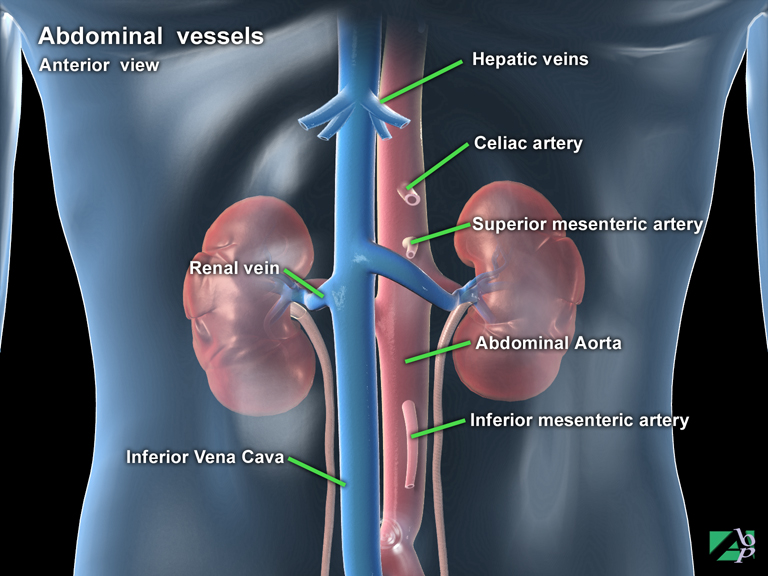
The abdominal aorta is a branch of the aorta, the major arterial artery of the trunk where it passes through the abdomen. It supplies blood to the organs of the abdomen and pelvis and its branches supply the lower extremities
Abdominal Fistula
A fistula is an abnormal opening between two spaces or structures such as organs within the body. This can result from an abscess, trauma or from improperly repaired injured organs. Abdominal fistulas are particularly serious as they can result in the release of enzymes from other organs that are particularly damaging to the stomach and to the peritoneum. Abdominal fistulas may also open to the outside resulting in the leakage of bile, urine or intestinal contents
Abdominal Guarding
A physical finding of a potential intra-abdominal injury, manifested by tensing of abdominal muscles when the abdominal wall is pressed
Abdominal Quadrants
Four arbitrary regions of the abdomen used to reference or describe a more specific abdominal region. The quadrants are: right upper quadrant, left upper quadrant, right lower quadrant and left lower quadrant. The quadrants are arrived at by bisecting the abdomen both horizontally and vertically using the navel (umbilicus) as the point of intersection
Abdominal Regions
This is a reference method used to divide the abdomen into 9 regions to describe the location of internal organs and to identify more specific regions of patient's sources of pain. These regions are: right hypochondriac region, epigastric region, left hypochondriac region, right lumbar region, umbilical region, left lumbar region, right inguinal region, pubic or hypogastric region and the left Inguinal region
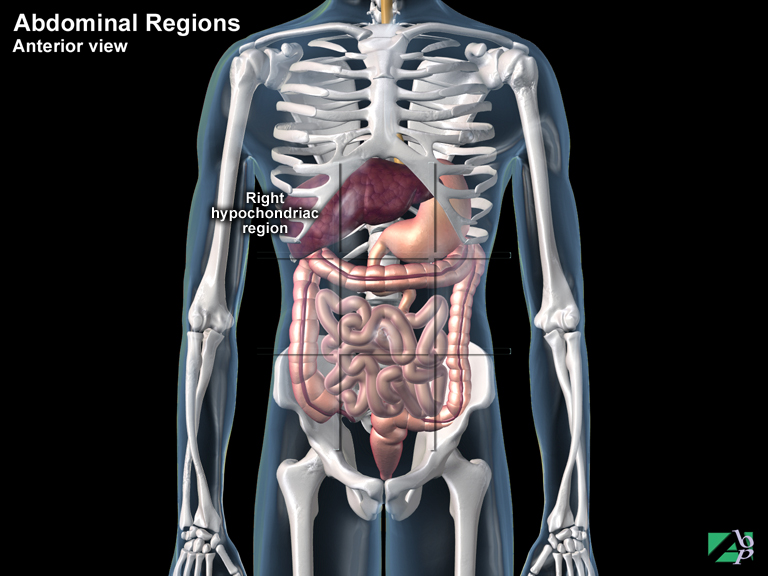
The right hypochondriac region contains the gallbladder, portions of the liver and the right kidney. It describes the location of the right upper one third of the abdomen
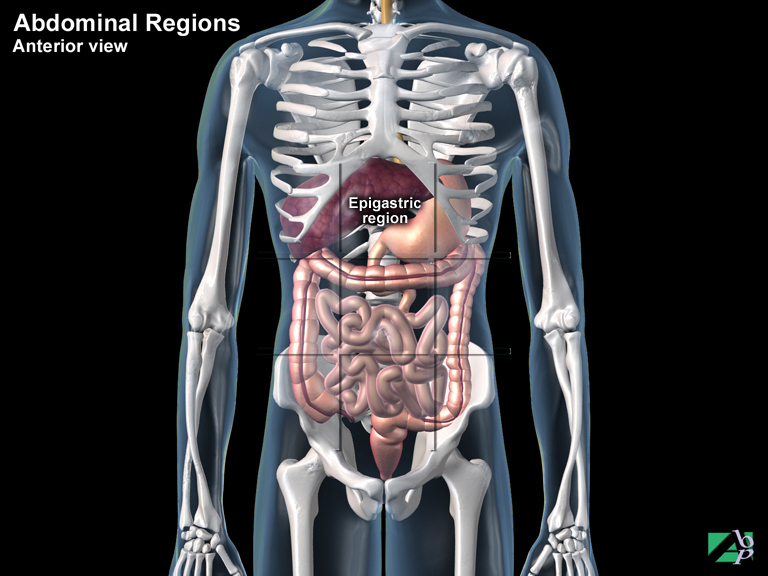
The epigastric region contains portions of the liver, stomach, pancreas and the duodenum. It describes the location of the upper median portion of the abdomen
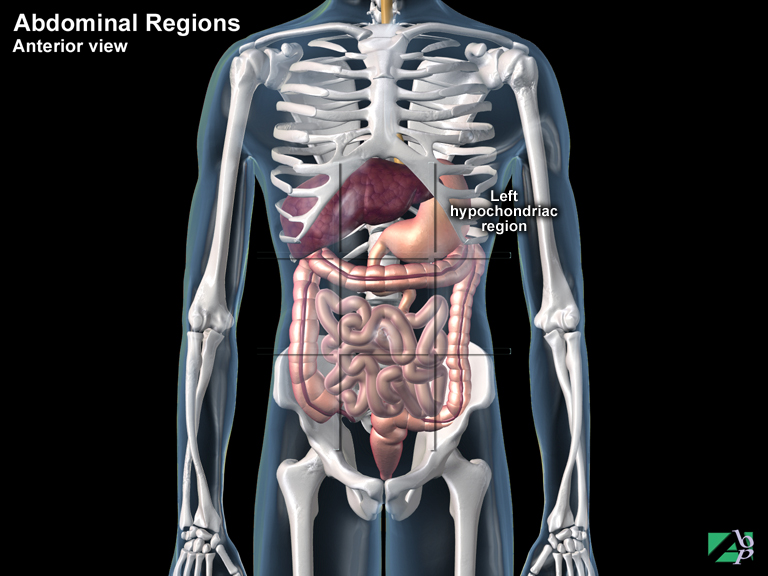
The left hypochondriac region contains the spleen, portions of the right kidney and the small intestine. It describes the location of the left upper one third of the abdomen
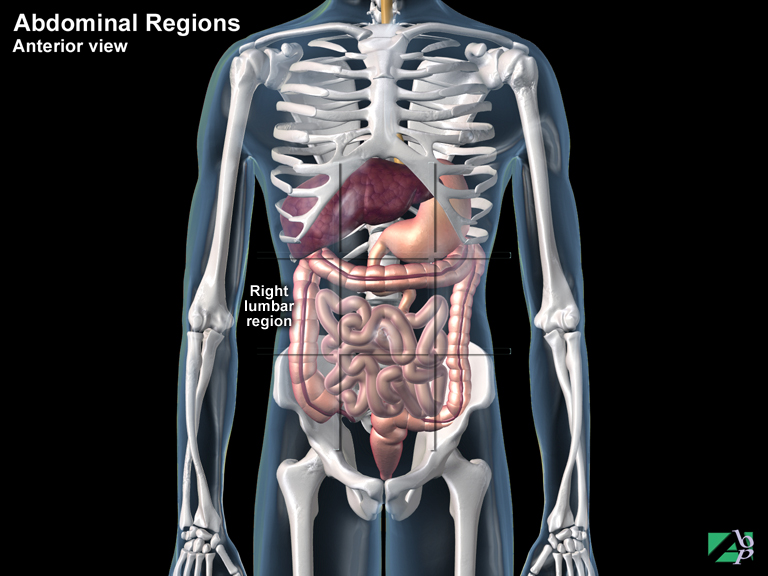
The right lumbar region (also known as the right lateral region) contains the caecum, ascending colon, portions of the right kidney and the small intestine. It describes the location of the right lateral one third of the abdomen
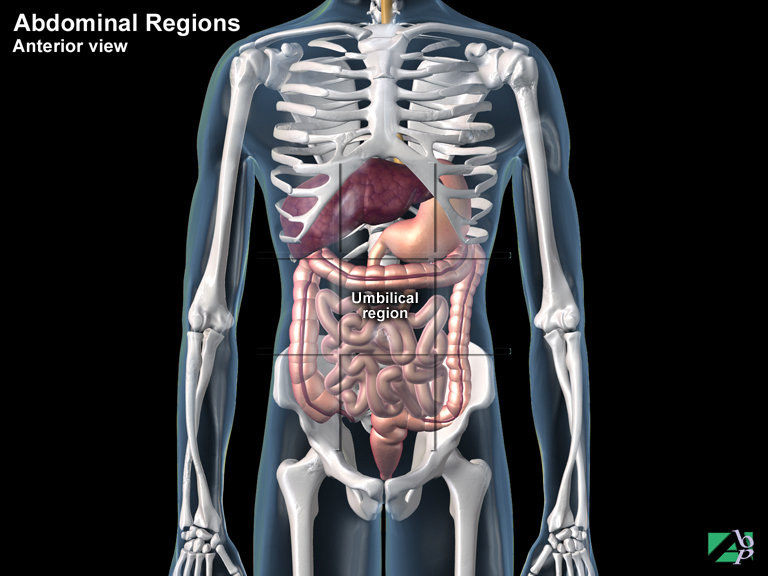
The umbilical region contains the jejunum, ileum, some of the duodenum, colon, kidneys and the major blood vessels. It describes the location of the center of the abdomen
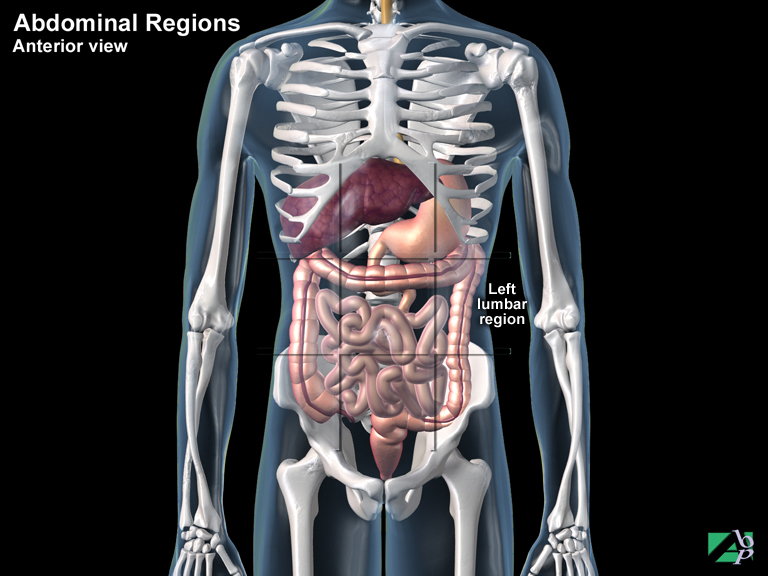
The left lumbar region (also known as the left lateral region) contains the descending colon, some of the left kidney, and the small intestine. It describes the location of the left lateral one third of the abdomen
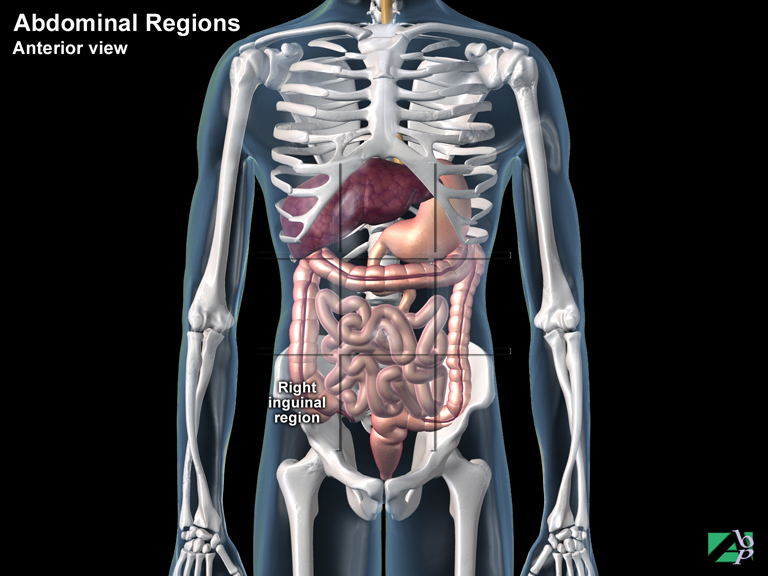
The right inguinal region contains the appendix, some of the caecum and the small intestine. It describes the location of the right lower one third of the abdomen
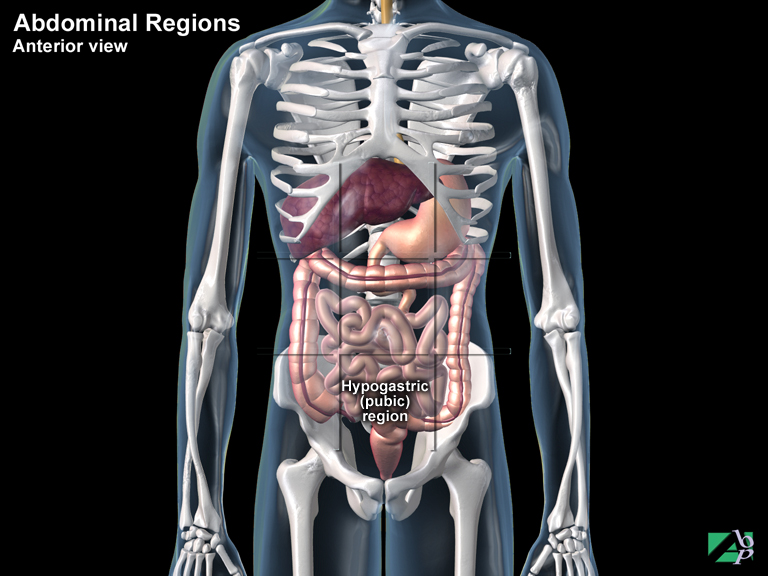
The hypogastric region contains the bladder, some of the small intestine and the sigmoid colon. It describes the location of the lower center one third of the abdomen
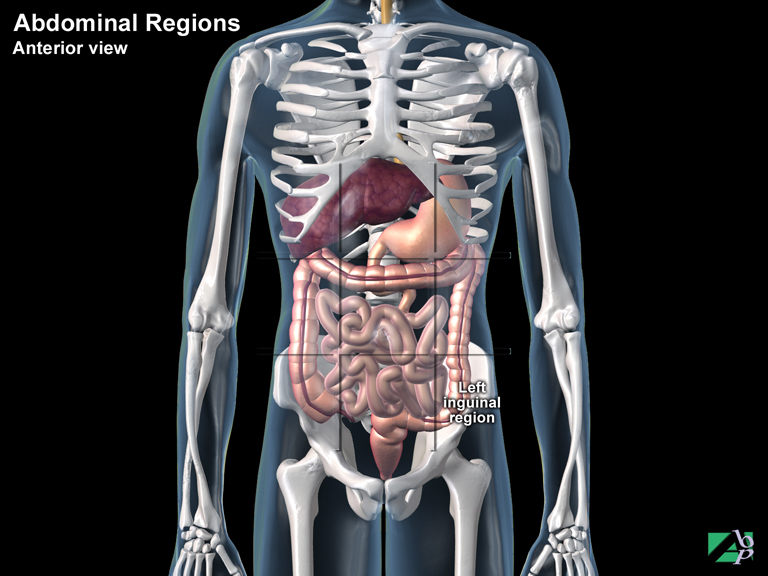
The Left inguinal region contains some of the small intestine, the descending colon and the sigmoid colon. It describes the location of the left lower one third of the abdomen.
Abduct - Abduction
This describes the movement of a body part away from the center of the body. For example if you hold your arm alongside your body and then raise it outwards and upwards you are abducting your arm, you are moving your arm away from your body
Abductor
A muscle that acts to move a limb or part thereof away from the center of the body
Abductor Digiti Minimi of Foot
The abductor digiti minimi in the foot originates from the calcaneus and attaches to the little toe; the lateral plantar nerve innervates it. It flexes and abducts the little toe
Abductor Digiti Minimi of Hand
The abductor digiti minimi of the hand originates from the pisiform bone in the wrist and attaches to the outside of the little finger. It abducts the little finger. The ulnar nerve innervates it
Abductor Hallucis
A muscle of the foot. It originates from the calcaneus (heel) and attaches to the base of the big toe. It flexes and abducts the big toe and supports the longitudinal arch of the foot
Abductor Pollicis Brevis
A muscle of the hand. It originates from the scaphoid at the wrist and attaches to the thumb. It abducts the thumb. The median nerve innervates it
Abductor Pollicis Longus
A muscle of the forearm. It originates from the upper part of the ulna just below the elbow and attaches to the base of the 1st metacarpal and trapezium, one of the carpal bones at the wrist. It abducts and extends the thumb at the carpometacarpal joint
ABG
A medical abbreviation for arterial blood gas
Abrasion
A superficial type of injury in which the skin is scraped or rubbed away from the body
Abscess
A collection of pus
Accessory Spleen
An accessory spleen is a piece of spleen completely separated from the normal spleen; it may also be referred to as a secondary spleen. It functions the same as the normal spleen. It is usually found in the tail of the pancreas
Accommodation
The function of the eye to adjust its focus on an object
Acetabulum
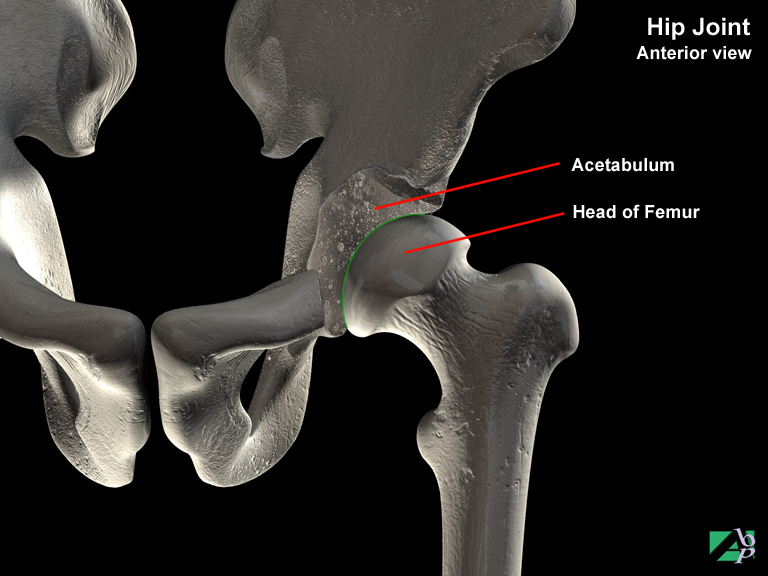
A large depression in the pelvis into which the head of the femur fits; part of the hip joint
Achilles Tendon
A tendon at the back of the leg near the heel, it serves as a point of attachment for the calf muscles to the heel bone, the calcaneus
Acoustic Nerve
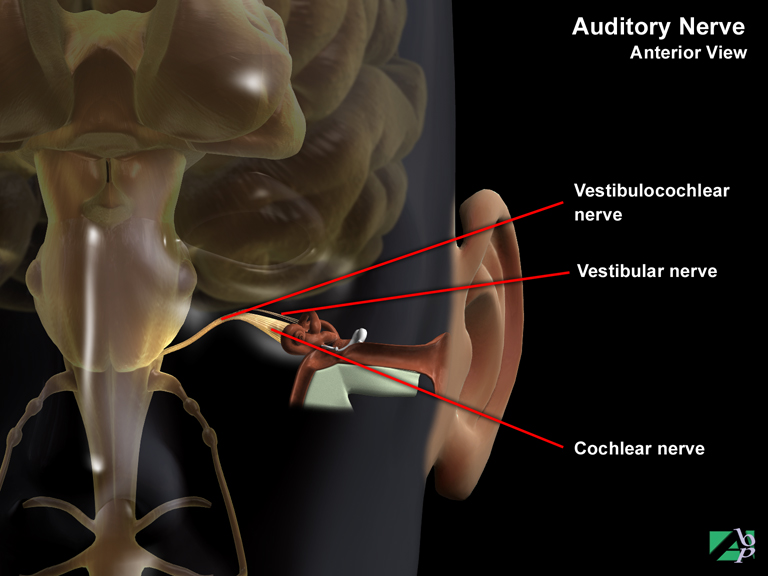
One of 12 paired cranial nerves that functions for hearing and to maintain equilibrium
Acromioclavicular
Relating to the acromion process of the scapula and the clavicle, which forms the acromioclavicular joint
Acromioclavicular Joint
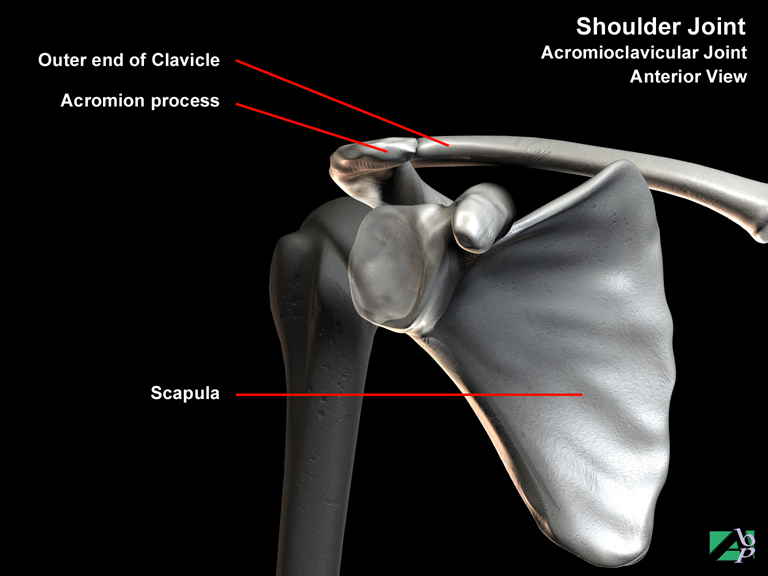
The acromioclavicular joint is formed where the acromion process of the scapula (shoulder blade) joins with the outer end of the clavicle (collar bone). This joint is surrounded by an articular capsule and is supported by two ligaments: the acromioclavicular ligament and the coracoclavicular ligament
Acromioclavicular Ligament
A shoulder ligament, it helps support the acromioclavicular joint
Acromiocoracoid
Relating to the acromion and coracoid processes of the scapula
Acromiohumeral
Relating to the shoulder joint, the acromion process of the scapula and the humerus, the upper arm bone
Acromion
Relates to the outer flattened end of the scapula, the tip of the shoulder
Acromion Process
Part of the scapula, it connects with the distal end of the clavicle to form the acromioclavicular joint
Acupressure
A procedure used to compress a bleeding artery or vein using a needle or series of needles
Acupuncture
Acupuncture, originated in China. Traditional Chinese medicine holds that there are as many as 2,000 acupuncture points on the human body, which are connected by 20 pathways called meridians. These meridians are held to conduct energy between the surface of the body and its internal organs. Energy is called qi, which is believed to help regulate balance in the body. It is influenced by the opposing forces of yin and yang, which represent positive and negative energy and forces in the universe and human body. Acupuncture is believed to keep the balance between yin and yang
Acupuncture involves the placement of needles into pressure points. It is used for many conditions including musculoskeletal disorders, circulatory conditions, psychological disorders and gastrointestinal disorders. Electrical stimulation and heat may also be used as an extra stimulus to the acupuncture needles
Acute
A term used to describe a short lived severe disorder or illness
Acute Abdomen
A term used to describe any serious disorder of the abdominal viscera, such as a burst appendix
Acute Bronchiolitis
Acute bronchiolitis is an infection of the lower respiratory tract involving the bronchioles of the lung. A virus or bacteria generally cause it, and most often affects infants but it can also be an inflammatory response to fumes or vapors
Acute Conjunctivitis
Acute conjunctivitis is inflammation of the conjunctiva; it may be caused by bacterial and viral infections and is contagious. It often affects both eyes but starts in one eye first. Symptoms include redness and swelling of the eyes, a sticky discharge from the eye, itchy or painful eyes and occasionally photophobia (sensitivity to light)
Acute Endophthalmitis
This describes inflammation of the internal structures of the eye e.g., the iris, lens or retina. It may be caused by bacteria, fungi and viruses and can result from eye surgery. It is potentially a very serious condition, which can lead to severe loss of vision
Acute Respiratory Distress Syndrome
Acute respiratory distress syndrome (ARDS) is a lethal form of pulmonary edema. The air sacs of the lung (alveoli) become filled with fluid resulting in severe hypoxemia or low levels of oxygen in the blood. This is caused by the blood flowing through the lungs not taking up oxygen due to the alveoli being filled with fluid or having collapsed and not being able to perform gas exchange. Unless this condition is arrested it ultimately leads to heart failure. ARDS can result from a number of causes including pulmonary contusion, inhalation injuries, from fat embolism and from infection
Addison's Disease
A disorder of the adrenal glands characterized by anemia, low blood pressure and gastrointestinal disorders
Adduct - Adduction
This describes the movement of a body part towards the center of the body. For example if you hold your arm horizontally away from your body and then lower it to bring it in towards the side of your body you are adducting your arm, bringing it towards the middle of your body
Adductor
A muscle that functions to adduct a limb or part thereof, adduct describes a movement of a body part towards the center of the body
Adductor Brevis
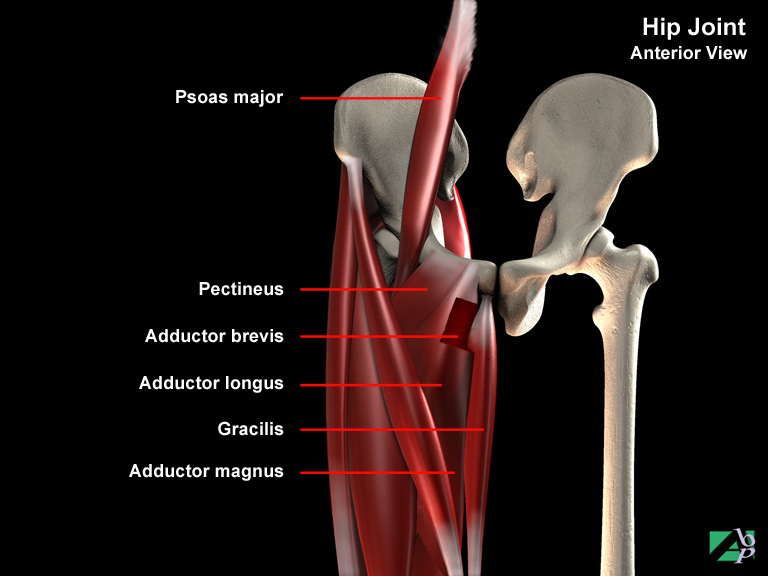
A muscle in the pelvic region. It originates from the ramus of the pelvis and attaches to the upper femur; the obturator nerve innervates it. It assists in adducting the hip
Adductor Hallucis
A muscle of the foot. It originates from the 2nd, 3rd and 4th metatarsals and attaches to the big toe. It adducts and flexes the big toe. The lateral plantar nerve innervates it
Adductor Longus
A muscle in the pelvic and hip regions. It originates from the body of the pelvis and attaches to the upper femur. It assists adduction and medial rotation of the hip. The obturator nerve innervates it
Adductor Magnus
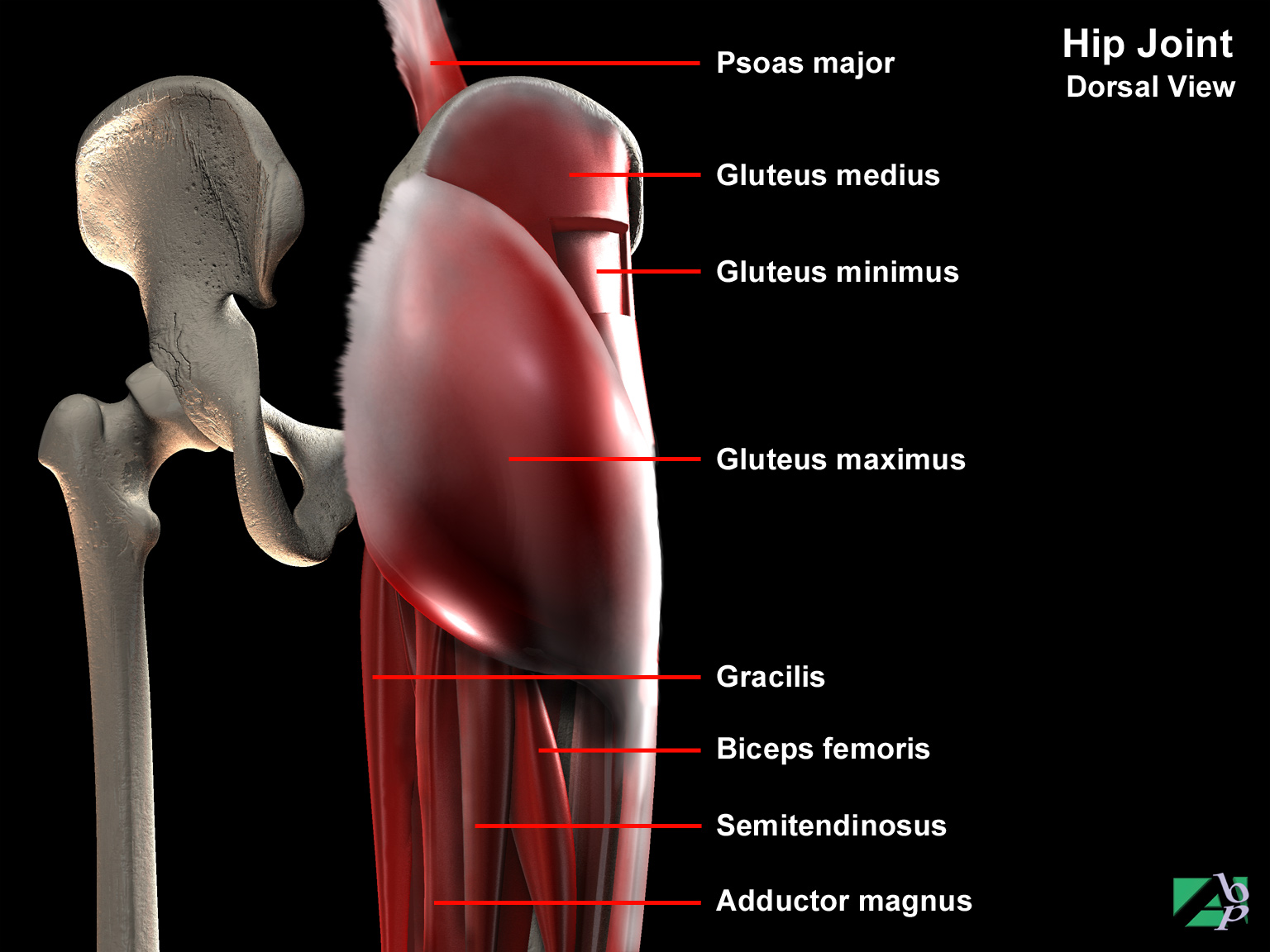
A muscle of the back of the upper leg. It originates from the buttock area and attaches to the lower femur. The obturator nerve innervates it. It assists adduction and medial rotation of the hip and helps extension of the hip
Adductor Pollicis
A muscle in the palm of the hand. It originates from the base of the 2nd and 3rd metacarpals and the trapezoid and capitate (two bones in the wrist) and inserts onto the base of the thumb. It assists adduction of the thumb. The ulna nerve innervates it
Adenoids
Glands or lymphoid tissue in the upper part of throat below the nose, also known as the pharyngeal tonsil.
ADH
A hormone that acts on the kidneys to assist water reabsorption. It is produced in the hypothalamus and secreted by the pituitary gland
Adhesion
An abnormal union or binding between tissues that are normally separated
Adhesive Capsulitis
Inflammation of the shoulder joint caused by adhesions in the joint. The condition is often referred to as "frozen shoulder
Adhesive Tenosynovitis
Inflammation of a tendon sheath caused by adhesions forming between the sheath and its tendon
Adipose
Refers to fatty tissue
Adipose Capsule
One of the layers of the kidney, the kidneys consist of three layers, the adipose capsule is the second or middle layer
Adrenal Cortex
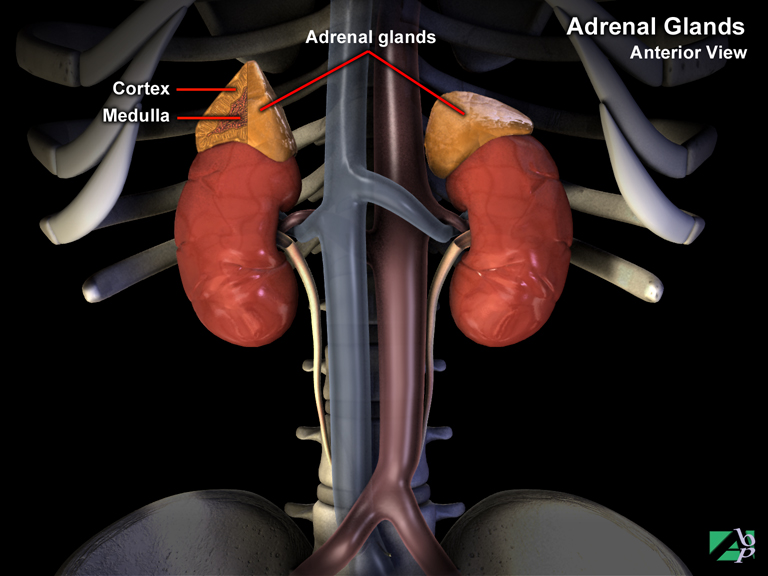
The outer part of the adrenal gland, a hormonal gland, one of two such glands that lie above each kidney
Adrenal Glands
There are two adrenal glands which are situated just above each kidney. They are part of the endocrine system i.e., their function is hormonal. Each gland is composed of an internal portion called the medulla and an external portion called the cortex. The medulla produces a hormone called epinephrine, which raises blood pressure. It also stimulates heart rate, dilates coronary blood vessels and increases the respiratory rate. The cortex produces a group of very important steroid hormones including corticosterone, which influences the body's utilization of sugar, desoxycorticosterone, which controls the retention of sodium and water and aldosterone, which affects the utilization of sodium and potassium. In addition the cortex produces sex and reproduction hormones. The adrenal glands also produce hormones that assist the body to react to stress. The adrenal glands are stimulated by the sympathetic nervous system
Adrenal Medulla
The inner part of the adrenal gland, a hormonal gland, one of two such glands that lie above each kidney
Adson's Test
A test for thoracic outlet syndrome
Aerootitis Media
A disorder of the middle ear caused by a change of atmospheric pressure outside of the ear. It is also known as otic barotrauma and barotitis media
Affective Disorder
Any mental disorder not caused by detectable organic abnormalities of the brain and in which a major disturbance of emotions is predominant
Afferent
Afferent means to convey or transmit, such as a nerve conveying a motor impulse to a muscle to move a body part
Agoraphobia
Irrational or abnormal fear of open spaces or large crowds of people.
Albumin
A protein produced in the liver
Albuminuria
Albumin in the urine, in many cases it is a sign of some kidney disorder
Alimentary Canal
The alimentary canal or as it is sometimes known, the alimentary tract, is a term used to describe the entire gastrointestinal tract, which includes the mouth, pharynx, trachea, esophagus, stomach, small and large intestine and the anus
Allergen
A substance to which the body is allergic
Alopecia
Complete or partial baldness
Alpha Waves
A type of brain wave pattern as seen in tracings of the brain's electric activity. There are four types of brain wave patterns, alpha waves, beta waves, theta waves and delta waves
Alveolar Bone
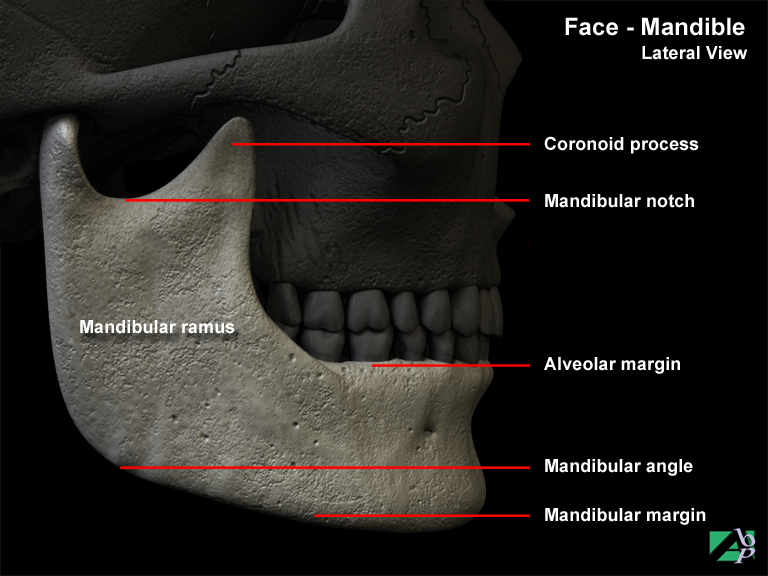
The part of the lower and upper jawbone that contains the sockets that holds the teeth. Also known as the alveolar process, or alveolar ridge
Alveolar Ducts
Tiny air passages in the lung
Alveolar Periosteum
A membrane that covers the root of a tooth, which attaches the tooth to the bony wall of its socket
Alveolar Process
Same as alveolar bone, that part of the upper and lower jawbone that contains the sockets that house the teeth
Alveolar Sacs
A minute air sac within the lung
Alveolus
Tiny air sacs within the lungs
Alveoloplasty
Alveoloplasty is a surgical procedure where the alveolar process (bony ridge that holds the sockets for the roots of a tooth) is reshaped or reconstructed so as to better hold an implanted tooth or dentures
Amalgam
A metal alloy used in dental fillings. It is composed chiefly of mercury
Ambulatory
Up and about, able to walk and get around
Ambulatory Cardiac Monitoring
A test in which an individual performs everyday activities while wearing a cardiac monitoring device for 24-48 hours. The monitor is continually recording the EKG. When the individual feels a palpitation or change in heart rate, or heartbeat, he or she pushes a button that automatically saves the EKG for 30 seconds before and 30 seconds after the button is pushed. The device is returned to the cardiologist for interpretation. The purpose of the test is to document valid, yet random cardiac abnormalities
Amenorrhea
Absence of menstruation
Anemia
A blood disorder in which the number of red blood cells or the amount of hemoglobin is below normal
Analgesia
The absence of sensation. In terms of a symptom it is due to some peripheral nerve abnormality
Anaphylactic Shock
A state of shock resulting from an allergic reaction to some substance or organism
Anaphylaxis
A severe allergic reaction, usually to an injection of some substance to which the individual is allergic
Anastomosis
This term is usually applied to the surgical connection of two hollow organs such as blood vessels. For example, if an artery is torn, one method of achieving repair is to surgically joint the ends at some other point, which is referred to as anastomosis
Anatomical Neck
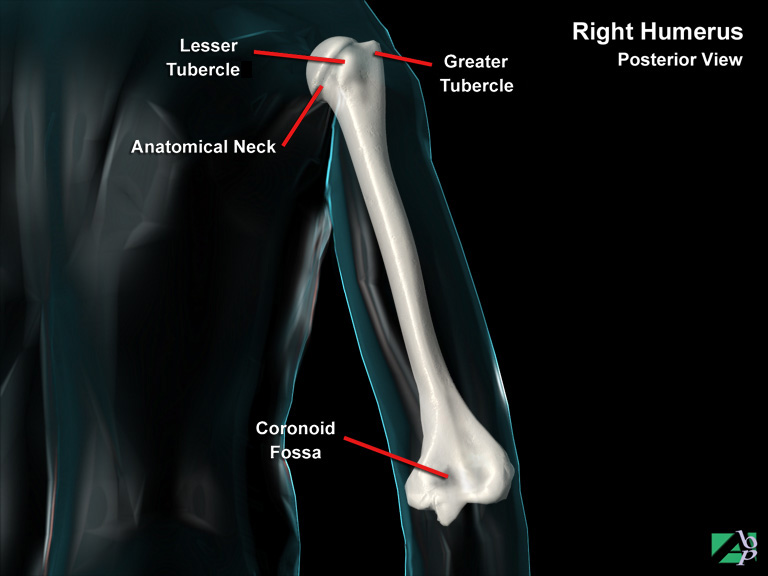
Part of the humerus just below the head, which forms part of the shoulder joint
Anatomical Snuffbox
Part of the back of the hand near the web space formed between the thumb and the index finger
Anconeus
A muscle in the elbow region. It originates from the lateral epicondyle of the humerus and inserts onto the olecranon. It provides some pronation of the forearm. The radial nerve innervates it
Aneurysm
A bulge in a blood vessel, usually an artery caused by weakness of the walls of the vessel and the pressure of the blood within the bulge. It is potentially a fatal disorder, particularly if the aneurysm bursts within an organ such as the brain, or an abdominal organ
Angiocardiogram
Angiocardiogram is an x-ray of the chambers of the heart and large blood vessels of the heart and thorax. The x-rays are taken after injecting an opaque material into the bloodstream, which allows better visualization of the structures
Angiectomy
Angiectomy is the surgical excision of part or all of an artery or vein or other blood vessel
Angioplasty
Angioplasty is a procedure to clear blocked blood vessels. A balloon inflatable catheter is inserted into the vessel
Ankylosing Spondylitis
Ankylosing spondylitis is a condition that causes inflammation of the joints of the spine and the joints between the spine and the pelvis. This results in pain and stiffness in the spine. The cause of the condition is unknown but it is thought to be an autoimmune disease, a disease in which the body's immune system attacks the body. People with blood type HLA-B27 are more prone to developing ankylosing spondylitis; there is also a strong hereditary connection
Ankylosis
Bony fusion between two bones, it may be acquired, congenital or the result of a medical procedure, for example the fusion of two vertebrae following an injury that has left the affected part of the spine unstable
Annulus
A ring or circular like structure. One such is a ring of tough fibrous tissue at the base of the heart. This ring supports and anchors the heart valve(s) into the heart itself. There are 4 valve annuli - one each for the tricuspid, mitral, aortic, and pulmonary valves. These rings of fibrous tissue all converge together in the middle of the heart, an area known as the fibrous skeleton of the heart.
Annulus Fibrosis
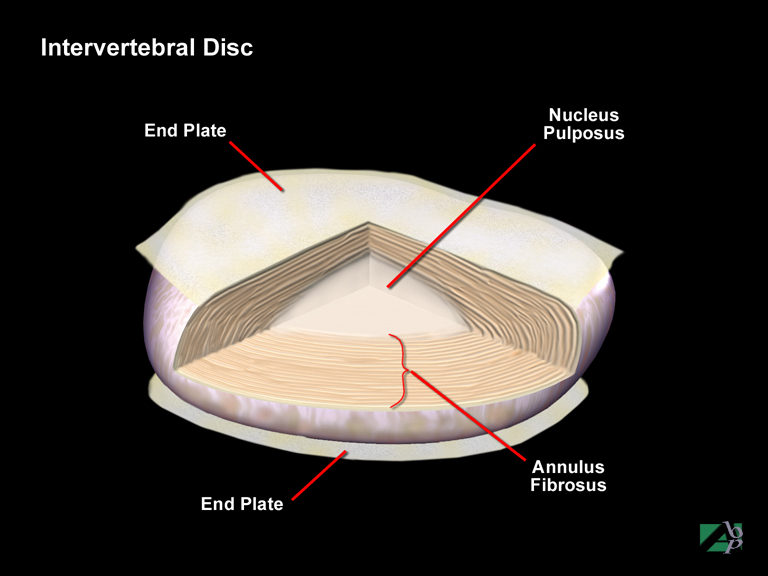
Part of an intervertebral disc, it consists of sheets of collagen fiber that envelops the nucleus and helps prevent structural failure. The elastic annulus is resilient, so that after being stretched it can recoil and springs back to recover after mechanical deformation
Anosmia
Anosmia is the loss of the sense of smell; it may be temporary or permanent. The brain regulates the sensation of smell. External odor molecules are breathed into the nose up into an area of the nasal cavity called the olfactory epithelium. This area comprises a small cluster of cells covered with cilia (tiny hairs) and a layer of mucous. Each cell is connected to an olfactory neuron (nerve cell). The cilia trap the inhaled odor molecules; information on the molecules is then transmitted to the olfactory neurons, which is then relayed to the brain where the smell is processed, experienced and identified by the brain. Anosmia can be caused by numerous factors including exposure to chemicals, drugs, diseases of the central nervous system and trauma, the latter including skull fractures and fractures of the nasal structures
Anoxia
A state in which the oxygen level of the body is below normal
Anterior
In front, the front part of a structure, the patella for example is located on the anterior aspect of the knee
Anterior Chamber
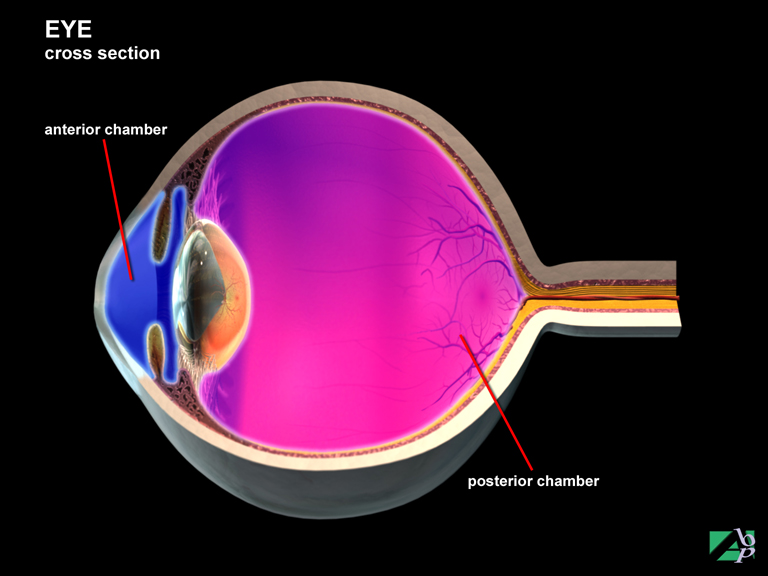
The anterior chamber is one of the chambers of the eye. A vertical partition is formed within the eyeball by the lens and iris dividing the interior of the eye into a front and back compartment; the smaller one in front of the lens contains the anterior chamber
Anterior Cruciate Ligament
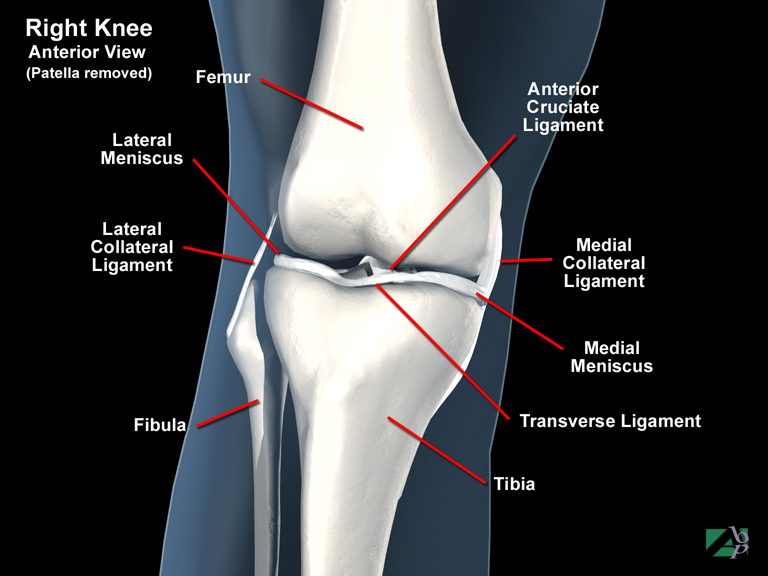
A knee ligament. A ligament is a structure that holds or joins bones together. The anterior cruciate ligament (ACL) attaches to the tibia and femur.
Anterior Iliofemoral Ligament
A ligament that supports the hip joint
Anterior Inferior Iliac Spine
One of the spiny ridges of the ilium (part of the pelvis). It serves as a point of attachment for muscles
Anterior Sternoclavicular Ligament
A ligament that supports the sternoclavicular joint
Anterior Superior Iliac Spine
One of the spiny ridges of the ilium (part of the pelvis). It serves as a point of attachment for muscles
Anterior Talofibular Ligament
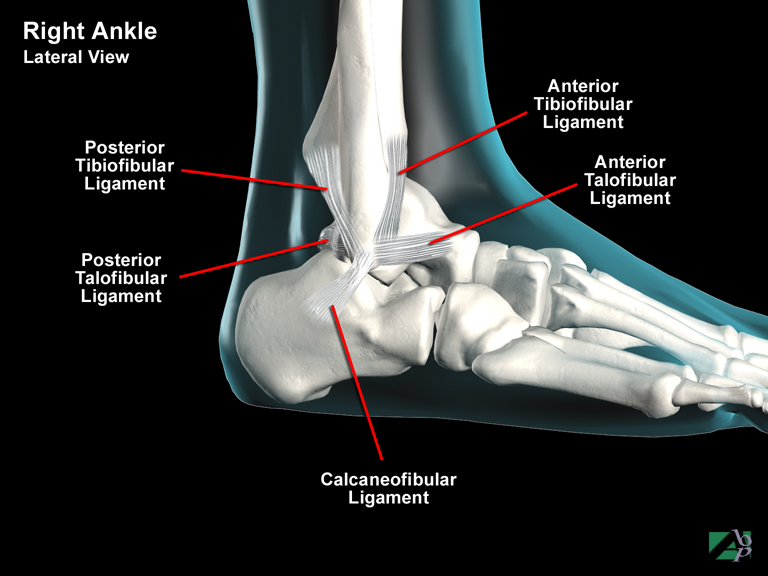
An ankle ligament, a ligament that supports the ankle joint
Anterior Tibial Artery
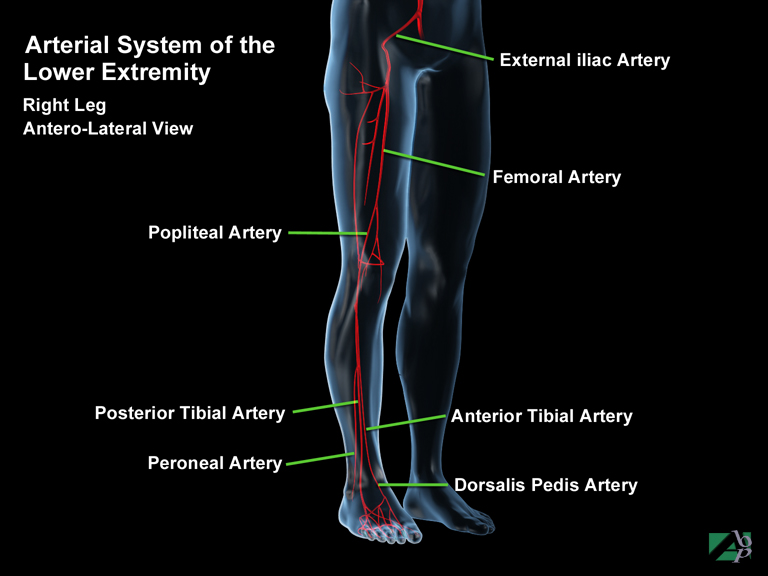
The anterior tibial artery descends from below the knee down the front of the leg and provides blood to the muscles of the lower leg and foot. The anterior tibial artery becomes the dorsalis pedis artery at the ankle
Anterograde Amnesia
Loss of memory of events after a head injury
Anterolateral
This refers to something being in front and to the side
Anteversion
A forward displacement
Anticoagulant
A substance that prevents clotting of the blood
Anuria
Anuria is the inability to urinate; this may be caused by kidney failure or from other causes including shock, ureter or bladder obstruction, kidney stones and vascular thrombosis. The term anuria is sometimes used to describe a condition where the kidneys fail to produce any urine at all (renal failure) or where the output is abnormally low
Aphakia
The absence of the eye's natural crystalline lens, usually after cataract removal.
Aphasia
Inability to understand speech or the written word and to express thoughts
Apicoectomy
This is a procedure to remove the apex (end) of the tooth. It is usually performed due to infection of the tooth. It may also be performed simultaneously with root canal therapy
Apnea
A temporary but brief inability to breathe
Aponeurorrhaphy
This is the surgical suture of an aponeurosis, which is something like a tendon. It is comprised of the same sort of tissue as a tendon and is located at the ends of flat muscles
Aponeurosis
A flat sheet of tough tissue composed of tissue similar to a tendon
Apophyseal
Refers to an outgrowth or bony projection from a bone
Appendage
A structure attached to another structure but of lesser importance
Appendix
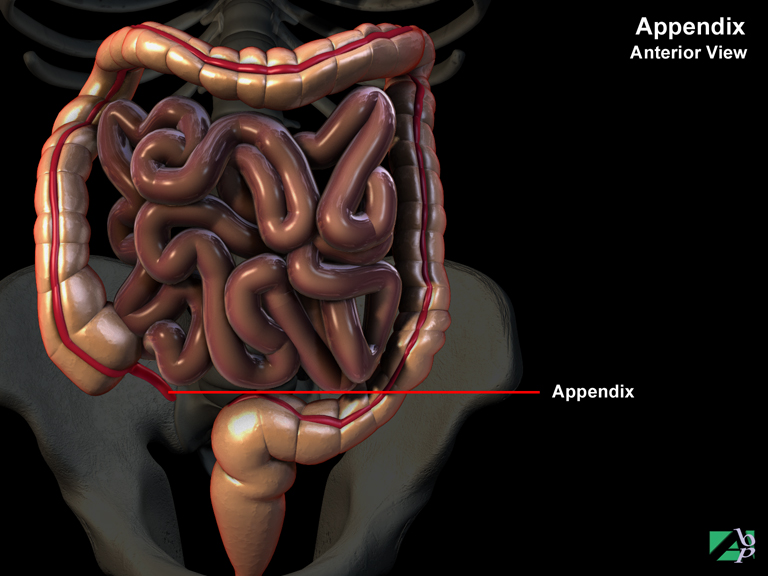
The appendix is a small appendage attached to the caecum, the first part of the large intestine. It has no known function although it has been suggested it could be related to lymph cells because there is a high concentration in the appendix. It varies considerably in length in individuals and has many configurations; sometimes it dangles free and in other cases is attached to the abdominal wall. It consists of the same tissue structure as the colon and is hollow within and has a blind ending
Apposition
Making contact between two separate adjacent parts, for example bringing the thumb into contact with the index finger, or other finger
Apprehension Test
A term sometimes used for a test carried out by a physician for dislocation of the patella. The knee is held slightly flexed and the patella is pushed laterally, causing the individual to vigorously resist the maneuver
Approximation
To bring together, as in reducing a fracture or a dislocation
Aqueduct of Sylvius
A channel that connects the third and fourth ventricles of the brain, through which cerebrospinal fluid passes
Aqueous Humour
The fluid contained within the chambers of the eye, which serves to maintain constant intraocular pressure, which in turn maintains the shape of the eyeball
Arachnoid Membrane
The middle layer of the meningeal covering of the brain and spinal cord. The meningeal covering contains three layers, the inner layer is the pia mater, the outer layer is the dura mater, or simply the dura
Arch Bars
Dental bars shaped to the contour of the maxilla and mandible, they are used in the treatment of mandibular and maxilla fractures
Arrhythmia
A change in the normal rhythm of the heartbeat
Arterial Catheterization
Arterial catheterization is a procedure that may be performed as a diagnostic procedure to examine blood flow in an artery or as a form of treatment for a blockage in an artery. A thin catheter with an inflatable balloon at the tip is passed into the artery; the blood flow propels the catheter through the artery as the balloon is inflated
Arterial Thrombosis
An embolism is a piece of blood clot that blocks an artery. A blood clot is medically known as a thrombosis. Arterial thrombosis can be induced by arterial trauma to the vessels and by associated soft-tissue injury. Thrombosis is a common complication of trauma particularly following fractures to the long bones, or following direct trauma to an artery, or from surgical procedures
Arteriogram
An arteriogram is an x-ray examination of arteries. The x-ray picture is taken after the injection of a radiopaque material into the artery
Arteriole
A very small artery
Arteriorrhaphy
A type of surgical repair to an artery
Arteriosclerosis
Thickening or hardening of the arterial wall
Arteriovenous Fistula
An arteriovenous fistula is an abnormal opening between an artery and a vein
Arthralgia
A generic term for pain in a joint
Arthrectomy
Arthrectomy is a procedure to clear blocked blood vessels. A minute rotating knife is passed through a catheter inserted into the vessel, which is then used to clear the blockage
Arthrocentesis
To withdraw fluid from a joint using a needle
Arthrodesis
Arthrodesis is the surgical fusion of the bones of a joint. When it is arthrodesed the joint is immobile. It is performed for cases of intractable osteoarthritis. It is most often performed on the wrist, ankle, foot and digits of the hand. Arthrodesis of the knee and elbow is considered to be the treatment of last resort. In the case of the wrist and digits it may be preferable to arthroplasty in individuals who engage in very heavy manual work. In the spine the procedure is referred to as spinal fusion, rather than arthrodesis. Arthrodesis to other joints may also be simply referred to as "fusion"
Arthroplasty
Arthroplasty means plastic repair of a joint, usually with a prosthetic implant, which is glued or cemented in. It can involve total replacement of a joint or partial. For example a total hip replacement is the prosthetic replacement of both the femoral head and the acetabulum that it fits into. Partial hip replacement is the prosthetic replacement of the femoral head only. Arthroplasty is most often performed on the hip due to osteoarthritis but it can be performed on many other joints
Arthroscopy
An arthroscopy is the examination and/or repair of a joint using an arthroscope. Arthroscopes are specially designed instruments that enable visualization of the interior of a joint and also allow repair of structures within the joint. The knee joint is the joint most often operated on with an arthroscope, although it is also frequently used for hip, shoulder, elbow and ankle and wrist problems
Arthrostomy
Also known as arthrotomy, the surgical opening into a joint. It is most often done for drainage purposes
Arthrotomy
Same as arthrostomy, the surgical opening of a joint
Articular Cartilage
Cartilage covering the ends of bones that form a joint as could be found in the knee, hip etc
Articular Cavity
This is the space between two or more bones that form a joint
Articular Fracture
A fracture of part of a bone (the end or head of a bone) that articulates with another bone, a fracture into a joint
Articularis Cubiti
A muscle in the elbow joint. It originates from the triceps muscle and inserts onto the capsule of the elbow joint. It raises the capsule away from the elbow joint. The radial nerve innervates it
Articularis Genu
A muscle in the front of the knee. It originates from the distal end of the femur and inserts onto the suprapatellar bursa in the knee. It retracts the bursa when the knee extends. The femoral nerve innervates it
Articulation
This term refers to a joint, the movement of two or more bones at a joint, two or more bones forming a joint are said to articulate with one another
Ascending Colon
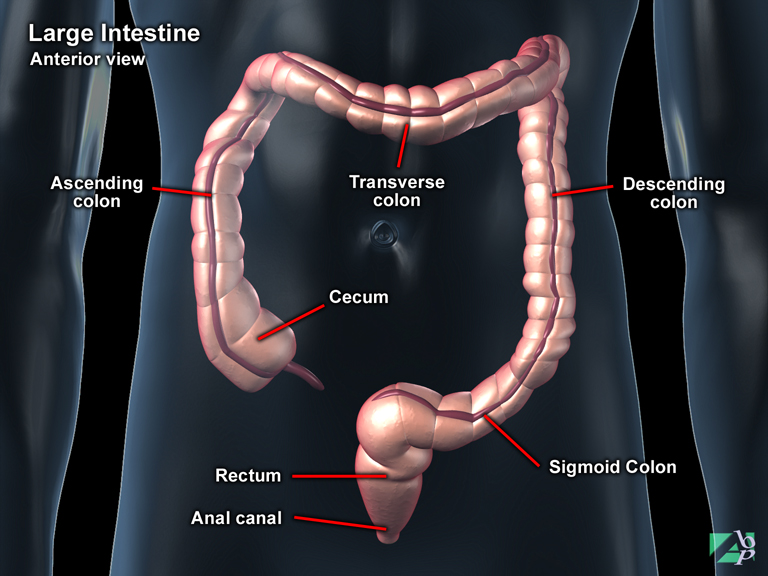
Part of the large intestine, it describes the part of the colon that goes upwards from the abdomen towards the liver. Although the colon is continuous, it loops within the abdomen and it is anatomically described according to the direction it travels, hence there is a transverse section (running across), a descending section (running downwards) and an ascending portion (running upwards)
Aseptic
Clean, free from contamination or infection
Aseptic Necrosis
Death of bone tissue due to lack of blood supply to the area of bone. The head of the femur is the most affected bone. Also called avascular necrosis
Aspiration
To remove blood or other fluid or air from a body tissue. It is usually done with a syringe or small tube
Astigmatism
Astigmatism is a refractive error of the eye and results in distortion of vision and can result from an injury to the cornea or lens of the eye, although most cases are congenital. A normal cornea is round and smooth, if the shape is disturbed it results in astigmatism or blurred vision. However it is also true that all individuals have astigmatism to some extent
Asymptomatic
Without symptoms, not producing symptoms. The term is frequently used to describe the state of a pre-existing medical condition, where the condition is evident but is said by the patient not to be producing symptoms
Ataxia
Lack of muscular control and coordination
Atelectasis
This describes the state of a collapsed lung
Atlantooccipital
Refers to the atlas and the occipital area of the skull. The atlas is the 1st cervical vertebra; the head rests upon the atlas
Atlas
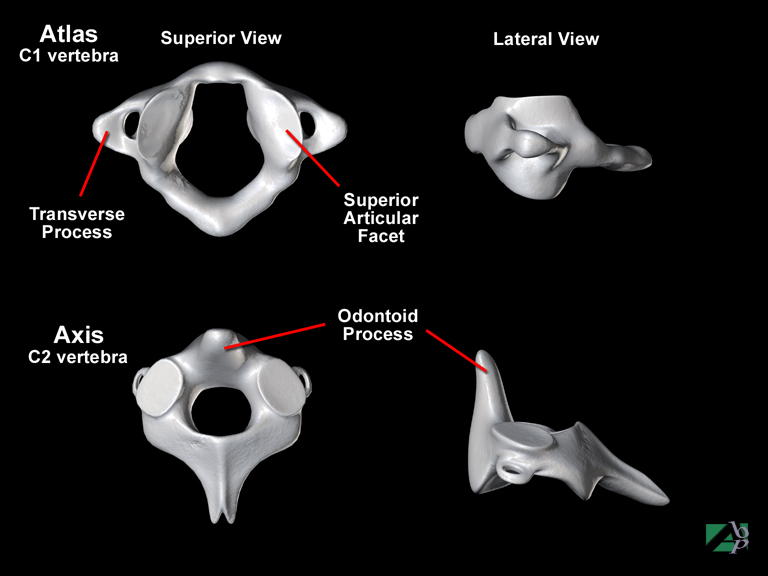
The first cervical vertebra
Atrium
The right and left atriums are chambers of the heart, which receive blood returned from the bodies venous system
Atrophy
Wasting. The term is most often applied to muscles but can also apply to an internal organ
Auditory Canal
The ear canal extending from the outside of the ear to the eardrum
Auricle
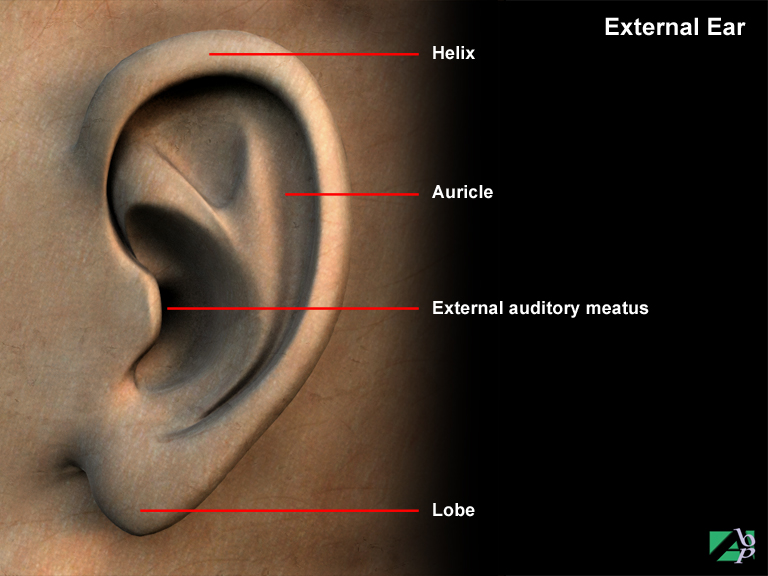
The fleshy part of the external ear
Auscultation
This describes the physical examination of a patient using a stethoscope or other listening device to detect sounds produced by the body
Autonomic Nervous System
The autonomic nervous system refers to a system of peripheral nerves and ganglia whose neural activity is automatic and not subject to voluntary or conscious control. Glandular activity and the activity of organs such as the stomach or intestine are free from conscious act. These activities are managed by the autonomic nervous system. The autonomic nervous system innervates the smooth muscles of the body such as those found in the stomach, gallbladder, arteries, the glands and the heart. It controls without intervention of the central nervous system most of the internal structures of the body: the eyes, saliva glands, arteries, windpipe, lungs, heart and liver to name just some. The autonomic nervous system is divided into two parts, the sympathetic nervous system and the parasympathetic system. The difference in these two systems is in the manner in which they affect the organs or tissues they control. Generally the sympathetic nervous system acts as a stimulator and the parasympathetic system an inhibitor or depressor
Avascular
Without blood
Avascular Necrosis
Death of bone tissue due to lack of blood supply to the area of bone. The head of the femur is the most affected bone. Also called aseptic necrosis
Avulsion Fracture
A fracture in which a fragment of bone is torn away by a ligament or tendon of a muscle becoming detached from its insertion onto the bone. Severe sprains sometimes result in a fragment of bone becoming detached
Axilla
The armpit
Axillary Artery
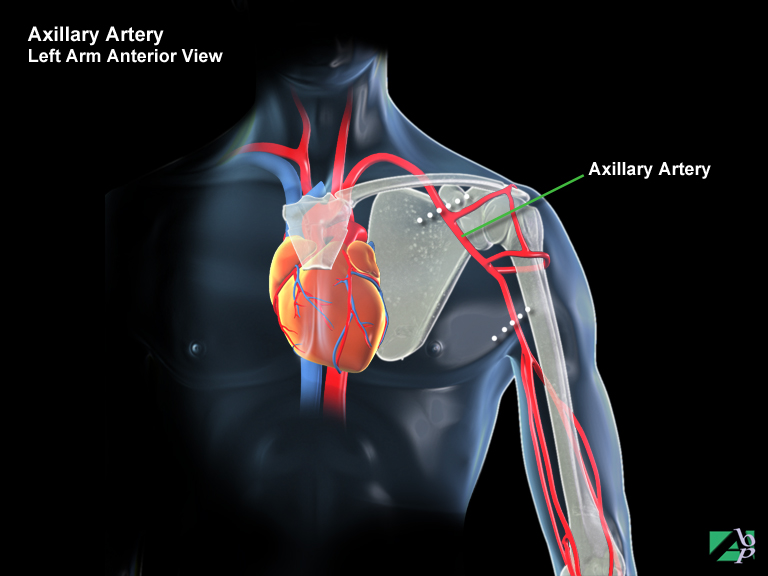
The axillary artery travels from the armpit down to a point approximately mid upper arm where it becomes the brachial artery. It has a number of branches that supply blood to the muscles and tissue of the shoulder and scapula region, and the chest wall
Axillary Nerve
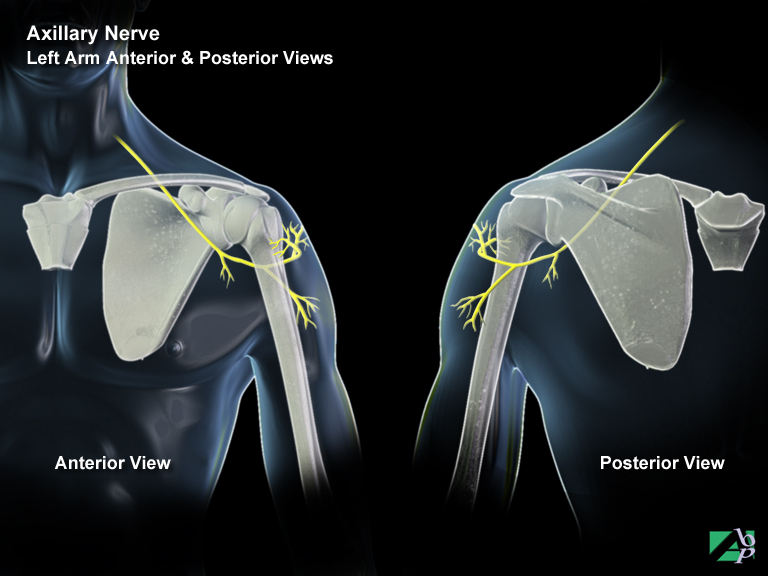
A peripheral nerve of the upper extremity. The nerve innervates the deltoid muscle and the teres minor muscle in the shoulder and also supplies sensation to some of the shoulder region
Axon
Part of a neuron (nerve cell), which carries impulses away from the cell body, these are known as outgoing impulses. The axon is covered by a white lipoid (resembling fat) called myelin, which acts as an insulator to prevent short-circuiting of neural impulses
Axonotmesis
A type of peripheral nerve lesion, a second degree nerve lesion. These lesions also generally recover without any neurological dysfunction but take longer to heal than 1st degree lesions and may take months to recover. In this type of lesion the axons are divided but the nerve sheath remains intact