Medical Glossary - Letter D
This medical glossary of terms beginning with the letter "D" contains the more common medical terms one might expect to encounter in a medical report or in hospital notes. The glossary is intended as a quick reference only; many of the terms are also referenced and illustrated in more detail in the medical libraries, to which you should refer for more detailed information.
Dacryoadenectomy
Dacryoadenectomy refers to excision of part or the entire lacrimal gland, the gland that produces the tears that wash the eye
Dacryocystogram
A dacryocystogram is an x-ray of the lacrimal duct (tear duct of the eye). A contrast material is inserted in to the duct via a cannula and a contrast material then injected before x-rays are taken
Dacryocystorhinostomy
Dacryocystorhinostomy is the surgical creation of a passage between the lacrimal sac and nasal passage for drainage of lacrimal tears
Debility - Debilitating
Weakness, lacking strength
Debride - Debridement
A medical procedure to remove dead tissue or foreign matter. This is often part of wound toiletry, to ensure no contaminating matter is left in a wound. Open fractures frequently require debridement of tissue or foreign material in or around the fracture site. Third degree burns also involve debridement of tissue
Deciduous Teeth
The first set of teeth (baby teeth). Humans develop two sets of teeth during their lifetime. The first set is referred to as the deciduous teeth that usually begin to appear at the age of 6 months and are complete at 24 months. The second set is referred to as the permanent teeth that usually begin to appear at age 6 or 7 and normally have replaced all deciduous teeth by age 13. The deciduous teeth consist of two incisors, one cuspid and two molars on each side, whereas permanent teeth consist of two incisors, one cuspid (canine), two bicuspids, and three molars on each side
Decubitus Ulcer
A pressure sore, most often on the buttocks or heels. Individuals who are confined to bed for long periods are particularly susceptible to developing pressure sores
Decussate
To cross over
Degloving
In reference to an injury, one in which extensive soft tissue has resulted, peeling of all layers of skin and underlying fascia. Industrial accidents where a limb is caught in machinery are mostly responsible for de-gloving type injuries, but this type of injury may also be seen in pedestrian and motorcycle accidents
Deglutition
The act of swallowing
Delayed Suturing
Wounds may be sutured by primary intent or by delayed suturing. Primary suturing means the suturing was performed at the time of the injury. Delayed, or secondary suturing, means the wound was not closed by suture until some time later
Delayed Union
Delayed union describes a state where bony union from a fracture takes longer to heal (unite) than expected. Age, type of fracture, blood supply to the bone, general health of the individual and other factors determines normal healing time. If union is taking longer than expected given these factors, then a state of delayed healing is said to exist. Delayed union may be a precursor to non-union. Causes for delayed union may be inadequate blood supply, infection or inadequate immobilization
Deltoid
A muscle that covers the shoulder, it originates from the clavicle and scapula and inserts onto the humerus. Its function is to assist in abducting the arm (to move it away from the body) and to assist with medial and lateral rotation of the shoulder
Deltoid Ligament
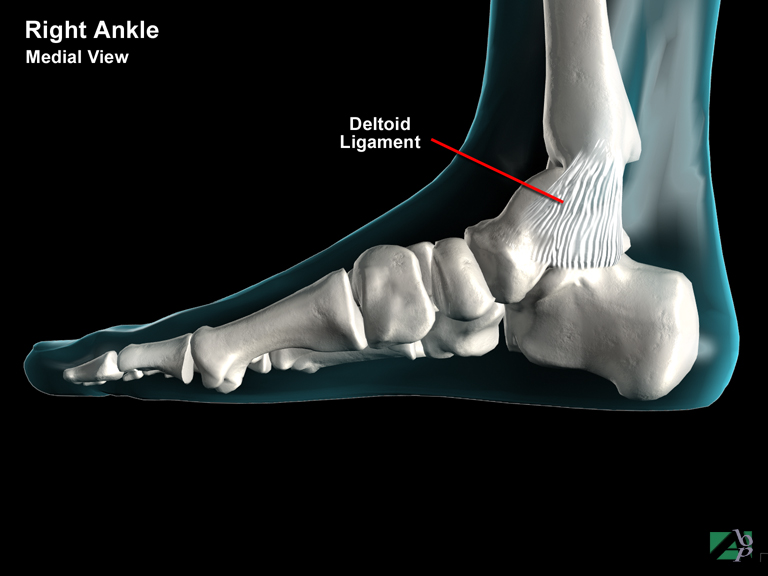
A ligament of the ankle
Dental Crown
Crowns may be used instead of fillings or inlays in cases where large portions of a tooth crown are lost due to trauma, or decay. Crowns are made out of various materials but mostly from porcelain or gold. Gold is more likely to be used in back teeth and porcelain in front teeth. Crowns may also be made with post implants, particularly in cases where much of the natural crown has been lost. Applying a crown is done in stages. Root canal therapy may be needed first, and then a temporary crown is applied pending the manufacture of the permanent crown and then finally the permanent crown
Dental Pulp
The interior of a tooth, which contains blood vessels and nerves
Dentin
A layer of a tooth, which covers the dental pulp. Above the gum it is covered by enamel, below the gum line it is covered by cementum
Depressed Fracture
A fracture in which a piece of bone is forced inwards, particularly of the skull, or zygoma (cheekbone)
Depressor Labii Inferioris
A facial muscle that functions to depress the bottom lip
De Quervain's Disease
de Quervain's disease, which is also known as radial styloid tenosynovitis, is inflammation of the tendon sheaths of the thumb. The tendon sheaths of the abductor pollicis longus and extensor pollicis brevis are relatively narrow and any irritation of these tendon sheaths leads to inflammation of the sheaths or tendons causing pain when the tendons move through the sheaths
Derma
Pertaining to the skin
Dermabrasion
Dermabrasion is a plastic surgery procedure for reducing minor scarring or other skin lesions by sanding or abrading the surface with an electrical abrading machine. Only the top layers of the skin are abraded
Dermatitis
Inflammation of the skin
Dermis
The dermis or corium is the middle layer of the skin; it lies beneath the epidermis and consists of two layers: the papillary layer and the reticular layer. The outer layers join the underside of the epidermis. It consists of many capillary blood vessels, sweat glands, nerve endings and hair follicles. The deeper and thicker layer consists principally of thick interwoven bundles of elasticized fibers, which allows the skin to stretch
Desiccate
To dry out
Diabetes Insipidus
Diabetes insipidus is a disorder of the endocrine system, which results in the antidiuretic hormone (ADH), which normally controls the composition and quantity of urine to be excreted, being unable to perform its function. It is characterized by polyuria (excessive urination) and polydipsia (excessive thirst). Diabetes insipidus has a number of causes including malfunction of the pituitary gland, kidney malfunction and brain tumor and head injury. Basil skull fractures are known to initiate diabetes insipidus. Diabetes insipidus is treated with medication, either with the drug chlorpropamide or the diuretic hydrochlorothiazide or with a nasal spray containing desamino, 8 d-arginine vasopressin, known as DDAVP
Diabetes Mellitus
Diabetes mellitus is a chronic disease resulting either from inadequate secretion of insulin by the pancreas or because the insulin that is secreted cannot be utilized by the cells. This lack of insulin results in abnormal fat, carbohydrate and protein metabolism. The condition is characterized by hyperglycemia (an increase of blood glucose beyond normal concentration), if untreated, a complete lack of insulin will result in metabolic changes that develop into ketoacidosis, a toxic condition that leads to coma and death. By contrast, some people with diabetes suffer only a minimal lack of insulin and are asymptomatic. However, in most cases diabetes is associated with a variety of vascular, ophthalmic, neurological, renal and other complications. In the past, diabetes was classified as juvenile-onset and adult-onset; today it is classified as Type 1 Insulin dependent and Type 11, non-insulin dependent
Diabetic Coma
Diabetics whose diabetic state has been adversely affected by trauma or by surgery may develop a number of diabetic complications that can lead to the individual falling into a coma. A number of coma states are recognized including hyperosmolar coma, hyperglycemic coma and ketoacidosis coma
Hyperosmolar coma develops when the diabetic becomes dehydrated or if large amounts of fluid are lost. This results in renal insufficiency, which increases the blood glucose level even further resulting in thickening of the blood (hyperosmolarity). Treatment of hyperosmolar coma is directed at fluid replacement
Hypoglycemia is an abnormal low level of sugar in the blood. Diabetics frequently suffer hypoglycemic episodes, most of which are amenable to self-treatment by the diabetic but trauma and in particular shock from trauma can induce a severe hypoglycemic state resulting in coma. Hypoglycemia is treated by the administration of glucose
Ketoacidosis is a condition in which there is an excess of acidity in the blood. Diabetic ketoacidosis is a common complication of insulin dependent diabetes mellitus; those with insulin dependent diabetes mellitus are most at risk, although diabetics with non-insulin dependent diabetes may also develop the condition under stress. Infection and trauma can both lead to ketoacidosis. The symptoms of ketoacidosis can range from mild nausea to coma
Diaphragm
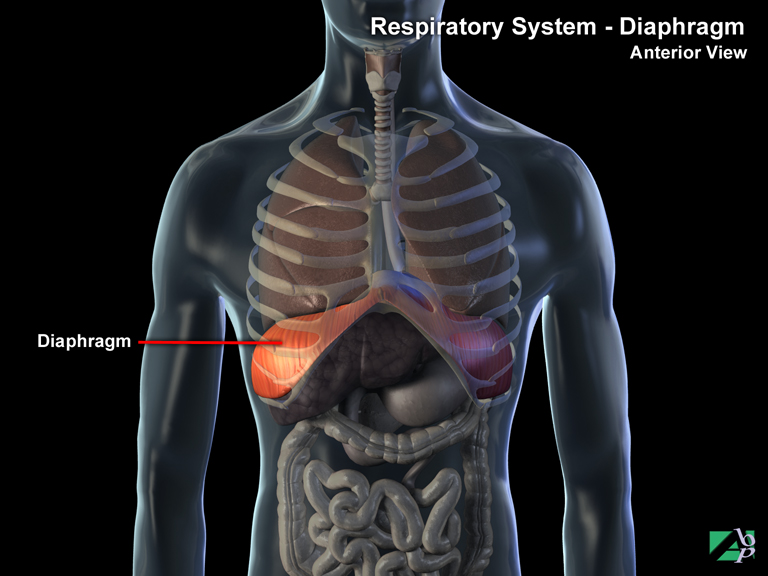
The diaphragm is a dome shaped muscular membrane that separates the thoracic cavity from the abdominal cavity. It is an important accessory organ of respiration. The diaphragm moves up and down and helps breathing by drawing air into the lungs when it goes down and expels air when it moves upwards. It lies horizontally in the body, with the dome side up below the lungs and heart and above the liver and stomach. The phrenic nerve innervates the diaphragm
Diaphysis
The shaft of a long bone
Diathermy
Diathermy is a form of therapy involving deep heat and is used to relax muscles
Diencephalon
The diencephalon is a relatively small part of the brain situated between and below the cerebral hemispheres and above the medulla oblongata and the cerebellum. It is sometimes referred to as the between brain. It is divided into the epithalamus, subthalamus, hypothalamus and thalamus
Diffuse
Spread out, not localized. The term is often used to describe pain or other symptoms
Dilatation
To enlarge an opening, or a hollow organ or structure, for example the esophagus, or urethra, or an artery or vein
Diplopia
Diplopia describes a condition where double vision appears i.e., a single object seems double when viewed through both eyes
Disarticulation
Disarticulation is another term for amputation but actually describes an amputation through a joint itself
Discectomy
The removal of an intervertebral disc
Discogram
A discogram is a diagnostic procedure performed to diagnose possible disc lesions. The test is performed on an outpatient basis. A local anesthetic is used to anesthetize the target area. Fluoroscopy, an imaging technique that projects an x-ray type picture onto a monitor is then used to guide a spinal needle into the suspect intervertebral disc. A radiopaque dye is then injected into the nucleus (center) of the disc and is evaluated for leaks occurring outside the injected disc
Distal
A term often used to describe part of the body or more particularly part of a limb. Distal means furthest away, the bottom end. For example long bones are often referred to as having a distal and proximal end. In the case of the femur the distal end is the end nearest the knee, whereas the proximal end is the end near the hip. In another example the distal humerus is the part of the humerus nearest the elbow; the proximal end is the end near the shoulder
Distal Interphalangeal Joint
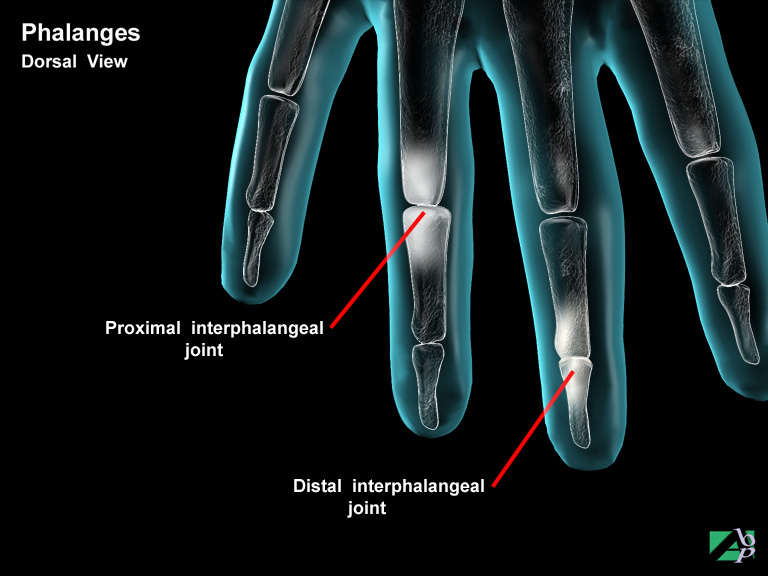
A joint of a toe or finger, the joint nearest the tip of either the toe of finger, often abbreviated to just DIP
Dorsal Pedis Artery
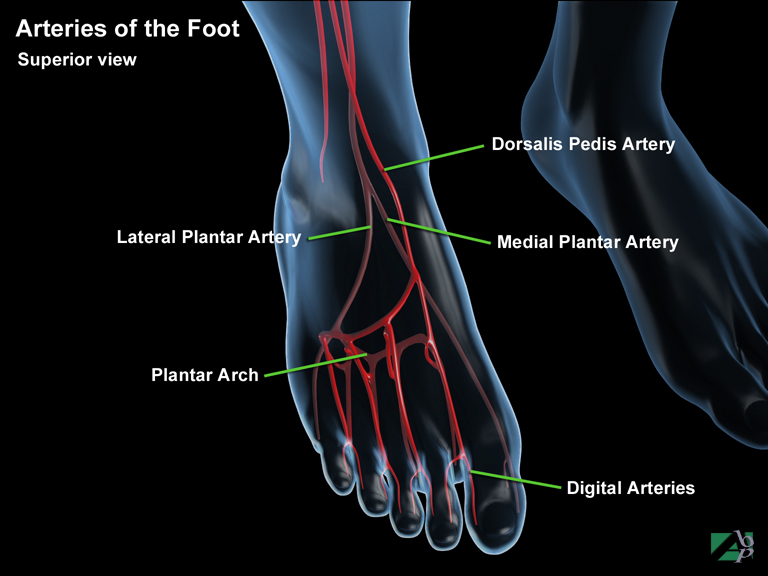
An artery in the foot, it joins with the lateral plantar artery from which the digital arteries arise
Dorsal Spine
The thoracic spine, the thoracic vertebrae
Dorsiflexion
To bend upwards as with the wrist or ankle. For example if you press your hands together (as if in prayer) then the wrist is held in dorsiflexion
Dorsum
The back of part of a limb or part of a limb, for example the back of the hand is the dorsal side of the hand
Dumping Syndrome
Dumping syndrome describes a set of symptoms that can occur from rapid emptying of the stomach. Dumping syndrome is described as "early dumping" and "late dumping". Early dumping describes the condition when symptoms appear immediately after or even during eating. Late dumping refers to symptoms that develop within one to three hours after eating. Symptoms include nausea, vomiting, bloating, diarrhea, sweating, light-headedness, dizziness and palpitations. Dumping syndrome is most often due to gastric (stomach) surgery but may also be due to low blood glucose levels
Duodenostomy
A duodenostomy is the making of a surgical artificial opening through the abdomen into the duodenum (the first part of the small intestine) for the diversion of the small intestine waste through the abdomen through a tube and out of the abdomen into an enterostomy bag. Duodenostomy may be temporary or permanent
Duodenum
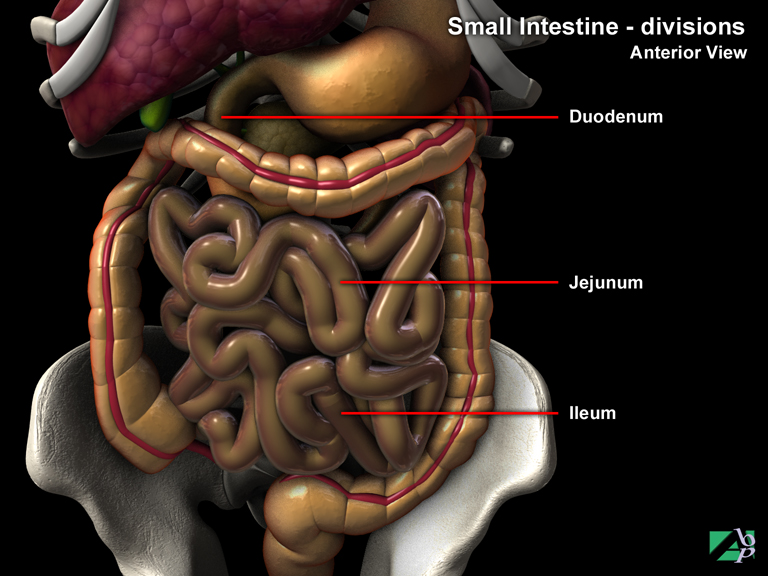
The duodenum is the first part of the small intestine. It begins at the pyloric opening with the stomach. It is C shaped and bound to the abdomen by the peritoneum (the lining of the abdomen). The duodenum is in close contact with several other abdominal organs including the liver, pancreas and gallbladder and left kidney. At about the level of the 2nd lumbar vertebra it becomes the jejunum
Dura Mater
The dura mater (or simply dura) is one of the layers of the meningeal covering of the brain and spinal cord. The dura is made up of two layers: the endosteal or periosteal layer that adheres lightly to the inner surface of the skull bones, and the meningeal layer that follows the general contour of the brain. These two layers stick to each over most of the brain except in certain locations where the layers separate to enclose the cranial dural sinuses. In the spine there is no connection between the dural sheath and the vertebra, rather there is a potential cavity called the epidural space
Dyspepsia
Indigestion
Dysphagia
Difficulty in swallowing
Dyspnea
Shortness of breath
Dystrophy
Degeneration or wasting of tissue as in muscle