Medical Glossary - Letter N
This medical glossary of terms beginning with the letter "N" contains the more common medical terms one might expect to encounter in a medical report or in hospital notes. The glossary is intended as a quick reference only; many of the terms are also referenced and illustrated in more detail in the medical libraries, to which you should refer for more detailed information.
Nares
The nostrils; the two openings of the nose. In front they are known as the anterior nares, in the back where the nares open into the throat they are known as the posterior nares
Narrow-Spectrum Antibiotics
Antibiotics that only target a limited number of bacterial diseases
Nasal
Referring to the nose
Nasal Intubation
A method of intubation where a tube is passed through the nose into the trachea
Nasal Septum
A cartilaginous structure that partitions the inside of the nose into left and right compartments
Nasalis
A facial muscle that extends across the nose, it functions to compress the nostrils
Nasogastric Intubation
A method of intubation where a tube is passed through the nose and then down into the stomach
Nasogastric Suction
A method of suctioning the contents of the stomach via a tube passed into the nose
Nasolacrimal Duct
The nasolacrimal duct is a small canal in the nose that drains tears produced by the lacrimal gland that wash the eye. The tears drain from the eye through the lacrimal ducts into the nasolacrimal duct into the nose
Nasopharynx
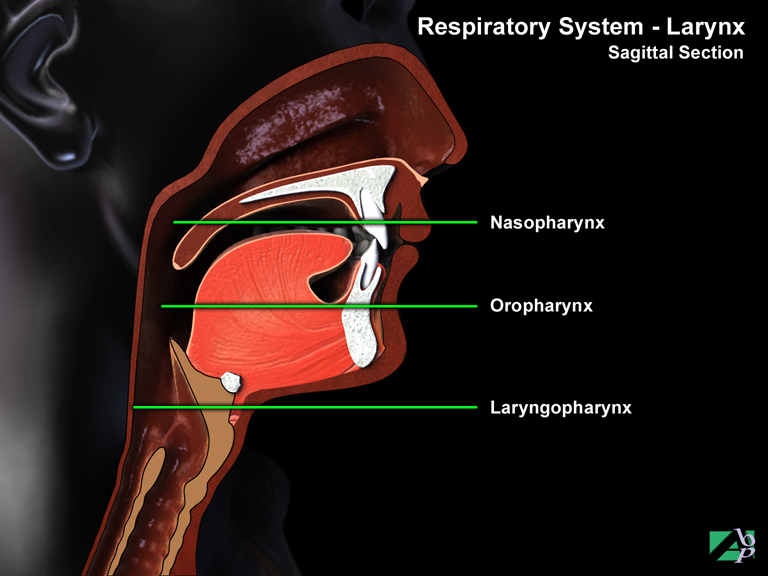
A division of the pharynx, the uppermost division that extends from the back of the nose to the roof of the mouth. This is a respiratory division. The nasopharynx also has connections with the middle ear cavities via the paired auditory and eustachian tubes
Nasotracheal Intubation
A method of intubation whereby a tube is passed into the windpipe via the nose
Navicular
One of the tarsal bones of the foot. The navicular lies behind the 1st cuneiform (directly in line with the big toe) and in front of the talus. It articulates with the talus and the three cuneiform bones. It is also sometimes used as an alternative name for the scaphoid bone in the wrist
Necrosis
Death of tissue or bone
Nephrectomy
An operation for the removal of a kidney
Nephritis
Inflammation of a kidney, it may be either acute or chronic. Acute means sudden and severe onset but of a short duration, chronic means long standing
Nephrocystanastomosis
Nephrocystanastomosis is the artificial joining of a kidney to the bladder. This may be necessary if the ureter, which normally carries urine from the kidney to the bladder, is obstructed or damaged, or is to be temporarily bypassed following surgical repair
Nephrostomy
An operation in which a surgical opening is made into the pelvis of the kidney and another opening made into the abdominal wall for the purpose of allowing urine to drain and thus bypassing the ureters
Nephrotomy
An operation involving making a surgical incision into a kidney
Nephroureterectomy
An operation to remove a kidney and its ureter
Nerve Block
A type of anaesthesia in which an analgesia is injected into a peripheral, or cranial nerve causing anaesthesia to the body area innervated by the nerve
Nerve Graft
An operation whereby a piece of nerve is sutured to the end of a damaged nerve
Nerve Root
The part of a nerve that is connected to either the brain or spinal cord from which it emerges
Neural Arch
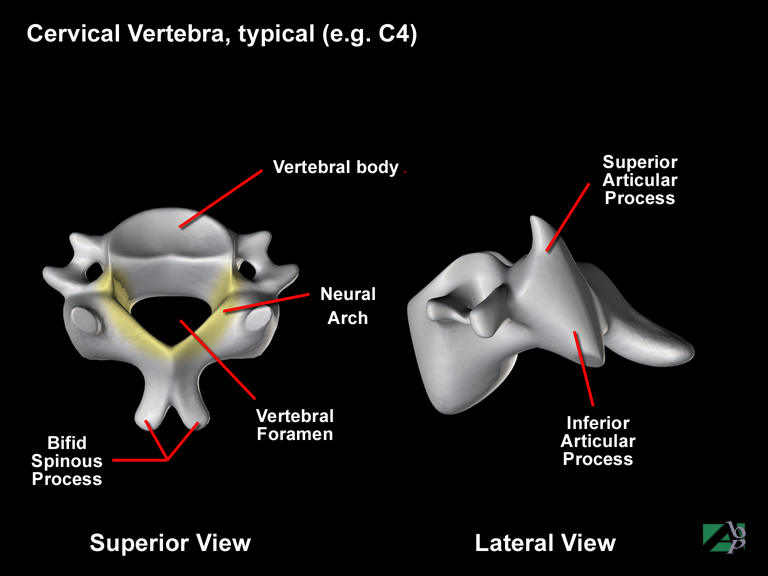
An arch-like projection from the anterior part of a vertebra comprising two pedicles and two laminae. The neural arch forms part of the spinal canal through which the spinal cord runs
Neuralgia
Nerve pain, pain caused by a nerve
Neurapraxia
A type of peripheral nerve injury, also known as 1st degree nerve injury. This type of nerve injury results in full recovery of nerve function
Neuritis
Inflammation of a peripheral nerve
Neurogenic
Originating from a nerve, for example pain may be described as neurogenic in which case a peripheral nerve is considered to be the cause
Neuroma
A growth on a nerve, or from nerve tissue. It may develop following trauma to a peripheral nerve, or following an amputation
Neuron
A neuron or nerve cell contains a cell body with a nucleus. The cell body has a number of fine branches extending from it, called dendrites. The dendrites carry impulses towards the cell body that are known as incoming impulses. The neuron also has a large single branch, the axon, which carries impulses away from the cell body; these are known as outgoing impulses. The axon is covered by a white lipoid (resembling fat) called myelin, which acts as an insulator to prevent short-circuiting of neural impulses. The white matter substance of the brain is made up of bundles of these myelinated axons, called tracts
Neurotmesis
A type of peripheral nerve lesion. In this type of lesion the nerve is transected or so badly injured that nerve regeneration cannot occur spontaneously. Even with surgical repair some residual dysfunction will result and the degree and extent will depend on the site of the lesion and the nerve involved
Nocturia
Frequent urination at night
Nodular
Resembling small lumps
Non-union
Non-union is the failure of bone to unite. This may be caused by numerous factors including fracture surfaces being too far apart, inadequate blood supply, interposition of soft tissue (muscle or cartilage) between the fracture ends, infection, improper fixation and/or immobilization of the fracture or through inadequate care by the patient himself or herself
Nucleus Pulposus
A jelly-like substance found inside an intervertebral disc
Nystagmus
An involuntary movement of the eyeball either up or down or side to side