Medical Glossary - Letter O
This medical glossary of terms beginning with the letter "O" contains the more common medical terms one might expect to encounter in a medical report or in hospital notes. The glossary is intended as a quick reference only; many of the terms are also referenced and illustrated in more detail in the medical libraries, to which you should refer for more detailed information.
Obliquus Capitis Inferior
A muscle in the back of the neck just below the head, it originates from the spinous process of C2 and inserts onto the Atlas (C1). It assists rotation of the head at the Atlanto-axial joint
Obturator Externus
A muscle in the hip region, which originates from the pelvis and inserts onto the greater trochanter of the femur, it is innervated by the obturator nerve. It laterally rotates the hip
Obturator Foramen
An opening in the pelvis through which the sciatic nerve and blood vessels emerge
Obturator Internus
A muscle in the hip region, which originates from the pelvis and attaches to the greater trochanter of the femur, it is innervated by the obturator nerve. It assists lateral rotation of the hip and helps to stabilize the hip joint
Obturator Nerve
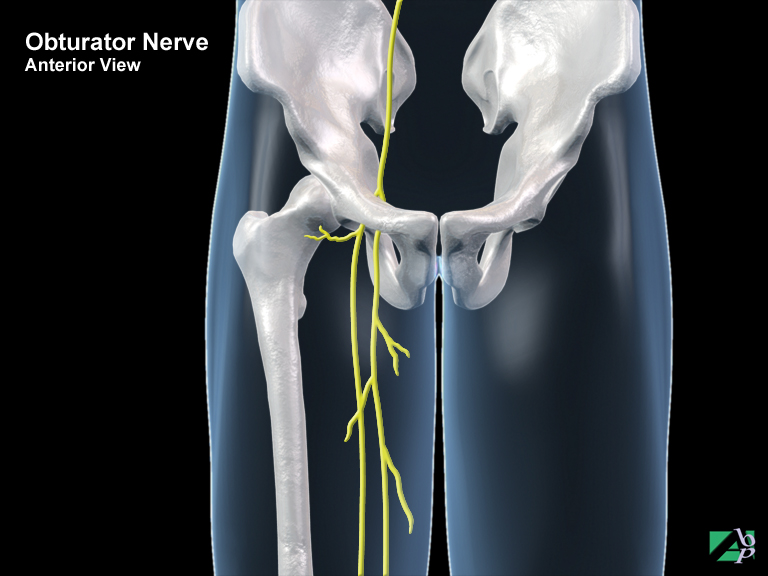
The obturator nerve is primarily a motor nerve. Located in the inner aspect of the thigh, it provides motor impulses to the adductor muscles of the thigh and some sensation to the medial aspect of the thigh
Occipital Bone
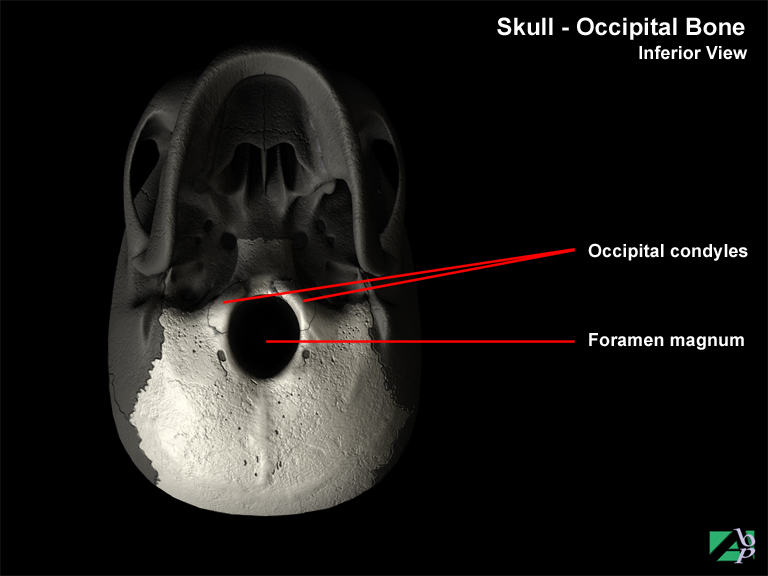
The occipital bone makes up much of the base of the skull. It is fastened to the parietal bones by the lamboidal suture. The foramen magnum is the large hole in the occipital bone through which the spinal cord merges with the brain. On each side of the foramen magnum are the occipital condyles that articulate with the atlas of the vertebral column
Occipital Lobe
The occipital lobe forms the posterior portion of the cerebrum and has no distinct separation from the temporal and parietal lobes. Functionally, the occipital lobes are concerned with vision. The occipital lobe interprets eye movements by directing and focusing the eye. It is also responsible for visual association, correlating visual images with previous visual experiences and other sensory stimuli
Occipital Nerve
A nerve originating from the neck, it is a sensory nerve and supplies sensation to the back of the scalp
Occipitalis
A muscle lying over the occipital bone of the skull. It functions to retract the scalp
Occiput
Refers to the back of the head
Occlude (Occlusion)
Refers to the act of bringing the teeth together, in normal occlusion the biting edge of a tooth will meet the biting edge of its counterpart in the opposite jaw, if this relationship does not exist it is said to be a condition of malocclusion. Occlude also means a blockage or obstruction e.g., a blood vessel may be occluded
Occlusal Surface
The biting edge of a tooth
Ocular
Refers to the eye or vision
Ocular Prosthesis
An artificial eye, it may also be referred to as an ocular implant
Odontoid
The 2nd cervical vertebra
Odontoid Process
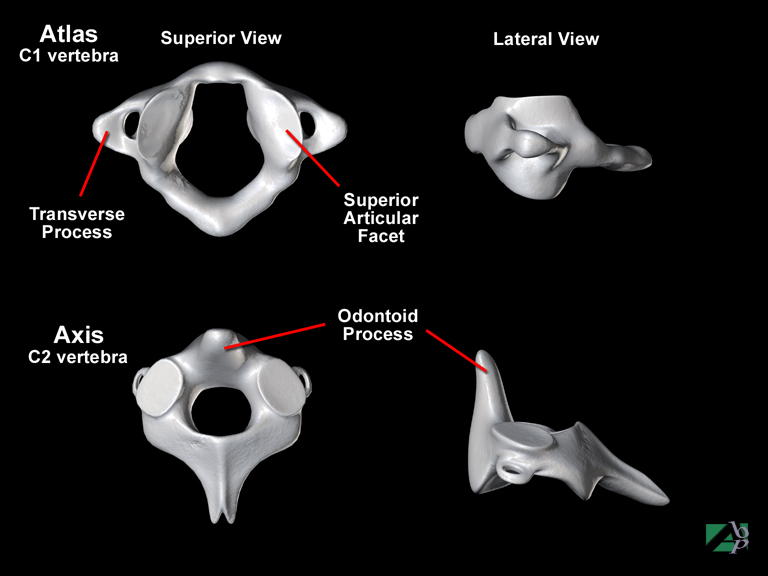
A bony tooth like projection from the second cervical vertebra, which articulates with the atlas (the 1st cervical vertebra) to permit rotation of the head
Olecranon
A hook-like spur on the upper end (proximal end) of the ulna, the point of the elbow. It articulates with a depression in the humerus called the olecranon fossa
Olecranon Bursitis
Inflammation of the olecranon bursa, a synovial fluid filled sac in the elbow
Olfaction
Refers to the sense of smell
Omentum
A fold of peritoneum, a membrane that lines the abdominal cavity and abdominal organs
Open Fracture
A fracture in which part of the fractures bone protrudes through the skin
Open reduction
Open reduction is a surgical operation to reduce a fractured bone or a dislocation. A surgical incision is made over the fracture site to expose the fracture or dislocation, which is then reduced
Ophthalmia
Inflammation of the deeper structures of the eye
Ophthalmic Nerve
A branch of the trigeminal nerve, it provides sensation to the eyeball, conjunctiva, upper eyelid and the forehead
Opponens Digiti Minimi of Hand
A hand muscle originating from the hamate bone on the wrist and inserting onto the shaft of the 5th metacarpal. It provides flexion and lateral rotation of the little finger at the carpometacarpal and metacarpophalangeal joints. The ulna nerve innervates it
Opponens Pollicis
A muscle of the hand originating from the trapezium bone on the wrist and inserting onto the 1st metacarpal bone. It medially rotates and flexes the thumb at the carpometacarpal and metacarpophalangeal joints. The median nerve innervates it
Optic
Relating to the eye
Optic Chiasm
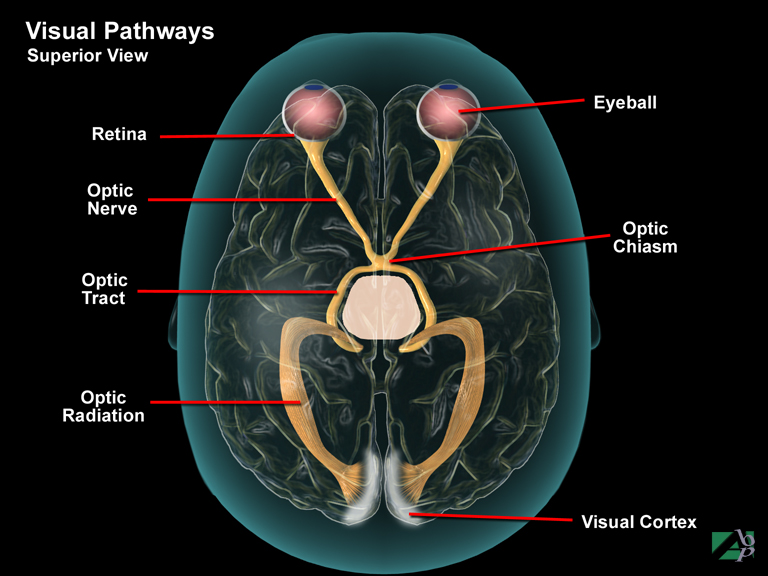
The optic chiasm is an area near the hypothalamus in the brain where each of the two optic nerves cross over to the opposite side forming an "X". The optical pathway is the communication between the optic nerves to the optic chiasma, to the optic tract to the visual cortex. The visual cortex is located in the occipital lobe of the brain, which interprets shape, color, movement and spatial organization
Orbicularis Oculi
A muscle originating from the orbital region, which assists to close the eyelid
Orbicularis Oris
A facial muscle encircling the lips of the mouth, it assists in closing the mouth and pursing the lips to form words
Orbit
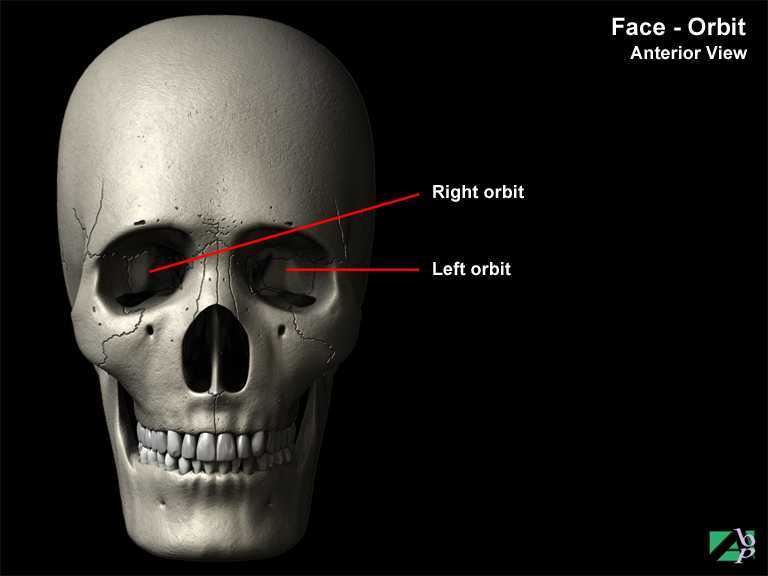
The orbits are the bony sockets that contain the eyes and their muscles and nerves and blood vessels. They are pyramidal in shape and are made up from parts of 7 cranial and facial bones including the frontal bone, the maxilla, zygoma, and sphenoid bone, lacrimal bone and the ethmoid bone
Orbitotomy
Orbitotomy is the surgical incision into the eye socket (the orbit)
Oropharynx
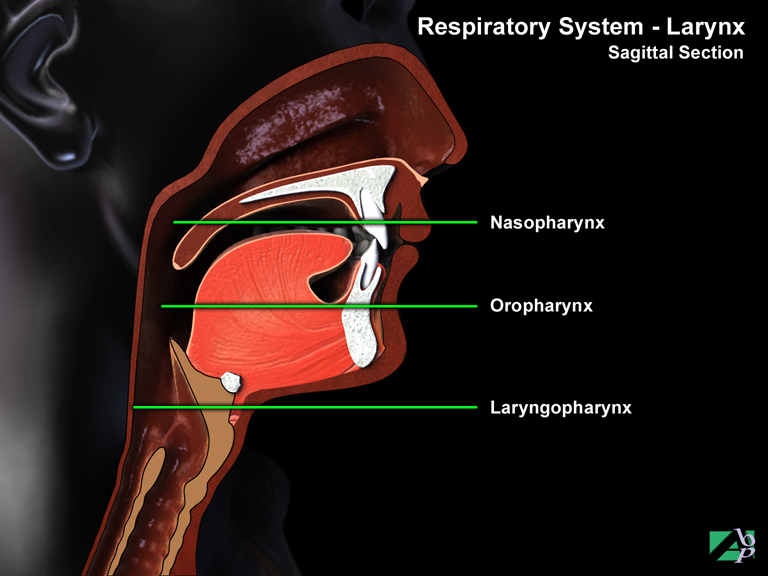
The oropharynx or throat is the part that of the pharynx that extends from the roof of the mouth to the level of the hyoid bone (just above the larynx). The base of the tongue forms the front of the oropharynx. Along the rear wall are the paired palatine tonsils. This portion of the pharynx performs both respiratory and digestive functions
Orthosis
An orthopaedic device to support or stabilize an injury, for example a cervical collar or lumbar support
Os calcis
Another name for the calcaneus, the heel bone
Os coxa
The bones that form the pelvic girdle (hip bones)
Osmotherapy
Osmotherapy is a principle used in the treatment for raised intracranial pressure whereby solutions thicker than blood are injected to cause dehydration, which has the effect of lowering the intracranial pressure by reducing the fluid
Ossicle
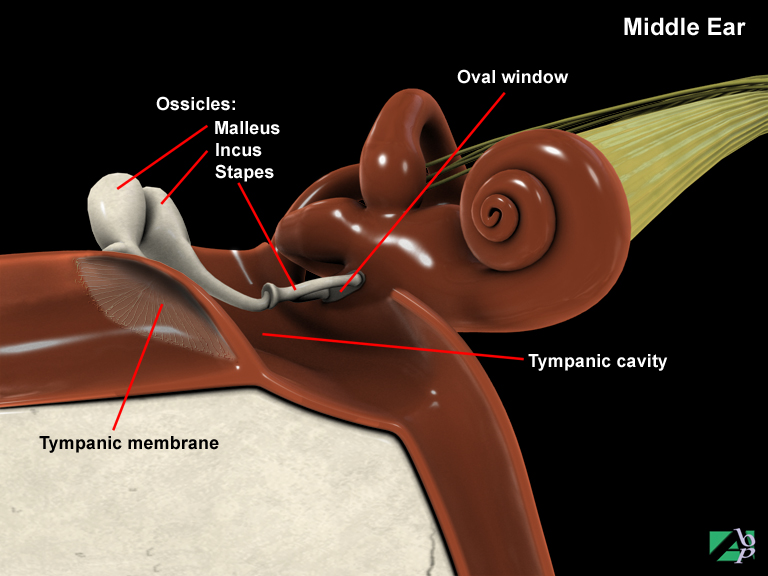
Refers to one of the three small bones of the inner ear, the malleus, the incus and the stapes
Ostectomy
An ostectomy is the removal or partial removal of a bone.
Osteoarthritis
Osteoarthritis may be referred to as arthritis or osteoarthrosis. It is classified as being primary or secondary. Primary osteoarthritis is due to natural wear and tear with ageing or there may even be hereditary factors involved. Secondary (traumatic) osteoarthritis is due to damage from trauma. Any joint may be involved but primary weight bearing joints are more susceptible to secondary osteoarthritis. Both types begin with erosion of the articular cartilage and synovial lining of the joint capsule. The loss of articular cartilage is progressive and is accompanied by new bone formation. Progressive cartilage destruction may eventually lead to surface friction and complete exposure of bone to bone. Any joint may be affected but the hip, knee, spine and fingers are the most common sites. The most common symptoms of osteoarthritis are pain and joint stiffness although in some cases joint stiffness may be painless. Deformity and swelling could also be evident
Osteoarthritis is a progressive condition and in some cases conservative treatment does not relieve joint pain and stiffness and reconstructive surgery is required. This is achieved by either arthroplasty or arthrodesis. Arthroplasty is creating an artificial joint. Arthrodesis is surgical fusion of a joint. Joints such as the hip and knee are best served with arthroplasty as it allows near normal joint motion whereas arthrodesis of these joints would result in considerable loss of joint movement and disability. Joints such as the fingers and toes are more likely to be treated by arthrodesis but this depends on the age and circumstances of the individual
Osteoarthrosis
Same as osteoarthritis
Osteoarthrotomy
An osteoarthrotomy is the surgical removal of the end of a bone that forms part of a joint
Osteochondritis Dissecans
Osteochondritis Dissecans is a relatively rare condition in which there is localized fragmentation of dead bone and articular cartilage in a joint. The bone fragment or fragment of cartilage may lodge in the joint and is seen as a loose body within the joint. It is often bilateral and is believed to be precipitated by repetitive microtrauma. It affects adolescents more than adults
Osteoclasis
Osteoclasis is the intentional surgical breaking of a bone. It may be done because of a faulty union of a previous fracture or to improve a deformity of a bone
Osteomyelitis
Osteomyelitis is a severe infection of bone and bone marrow, usually through the staphylococci bacterial organism. Infection can be through a trivial injury but usually it is seen with open fractures, contaminated wounds over exposed bone, or from objects penetrating the skin down to bone. The disease can be acute or chronic. The process of osteomyelitis begins by bacteria lodging in the bone where it multiplies resulting in pus formation and increased pressure within the bone and decreased blood supply to the bone and finally bone necrosis (death). Pieces of dead bone called sequestra may initiate further infection and the infection spreads, in some cases not just locally but to an entirely different site
Osteophytes
Bony outgrowths found on vertebra, they are often a pre-curser to spondylosis (arthritis of the spine)
Osteotomy
An incision into or the removal of a piece of bone
Otitis Media
Inflammation of the middle ear
Oval Window
A small opening between the middle ear and the inner ear