Lungs
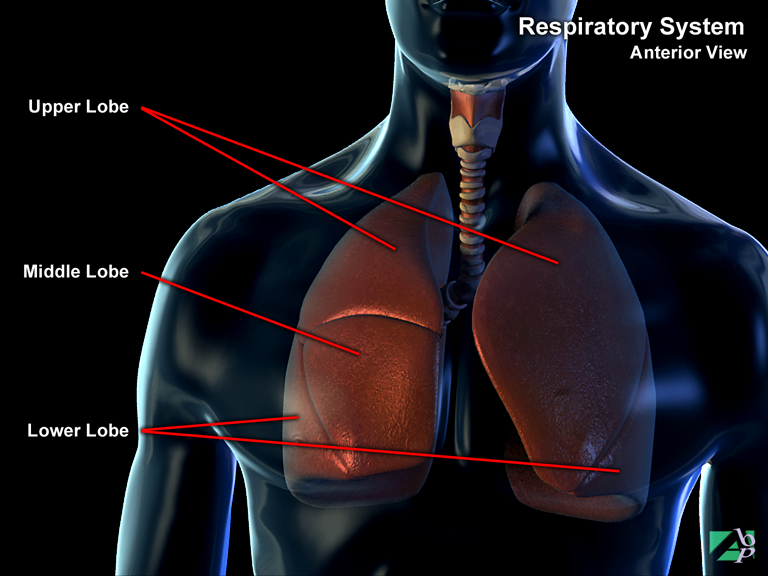
The paired lungs lie between the rib cage and diaphragm and are separated from each other by the heart and mediastinum (a space which contains the heart, esophagus, trachea and vital blood vessels e.g. aorta, pulmonary artery). The left lung is smaller than the right comprising a superior and inferior lobe. The right lung is comprised of three lobes, superior, middle and inferior. The lobes contain the alveoli. Membranes called pleura surround the lungs, one membrane is called the visceral pleura and another is the parietal pleura. The visceral pleura lines the outer surface of the lungs. The parietal pleura lines the thoracic walls and the diaphragm. The space created by the two pleura is called the pleural cavity. The pleura serve a number of important functions. They act as a lubricant to allow the lungs to move along the chest wall, they provide compartmentalization of the thoracic organs and also provide pressurization for the lungs