Anatomy
The skull (cranium) bones are made up of eight cranial and fourteen facial bones.
The skull contains numerous cavities these being the cranial cavity (the largest of all), the nasal cavity, middle and inner ear chambers and the two bony orbits. The latter that houses the eyeballs is actually formed by facial and cranial bones.
The bones of the skull are partitioned into two parts, the vault and the base. The vault, which is also known as the calvarium, is the upper rounded dome-like portion. It is made up of the frontal bone, two parietal bones, two temporal bones, an occipital bone, a sphenoid bone and an ethmoid bone. The base refers to the irregular portion located below the vault. The base of the skull is made up of the basal portion of the frontal bone, the ethmoid, the sphenoid and the basal portion of the occipital bone. The contour of the base of the skull is irregular and rough as opposed to the contour of the vault of the skull that is a smooth convex surface. The skull base is also perforated with passages for cranial nerves and blood vessels to pass through. The base of the skull also contains the foramen magnum, which is a large opening of the occipital bone that provides a passageway for the lower portion of the brain stem, as it becomes the upper portion of the spinal cord.
Sutures of the Skull
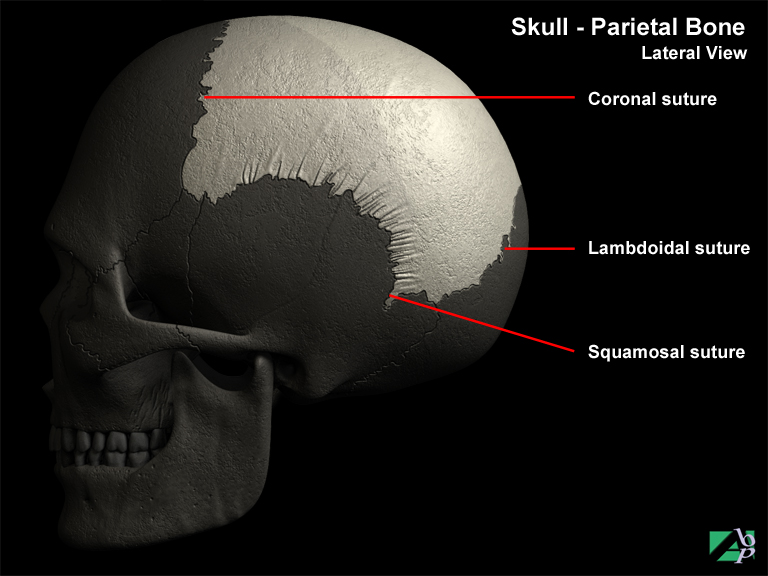
The vault and base are separated by what is termed sutures of the skull. These sutures are made up of membranous tissue and cartilage. The four prominent skull sutures are the coronal suture, the sagittal suture, the lambdoidal suture and the squamosal suture.
The coronal suture unites the frontal bone with the two parietal bones. The sagittal suture unites the bones at the midline. The lambdoidal suture separates the parietal and occipital bones. The squamosal suture is located between the parietal and temporal bones.
Frontal Bone
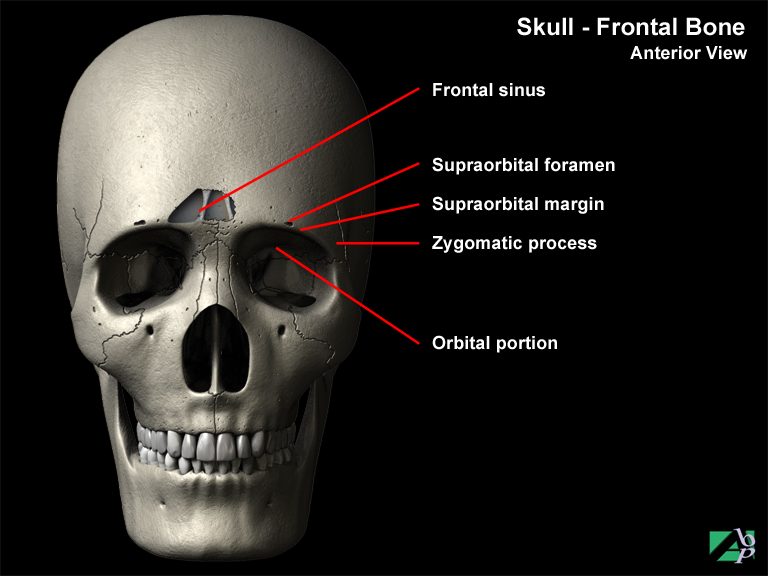
The frontal bone forms the anterior roof of the skull, the forehead, the roof of the nasal cavity and the superior arch of the orbits containing the eyeballs. The prominent bony ridge over the orbit (the eyebrows) is known as the supraorbital margin (See Illustration). Foramina along this ridge, called supraorbital foramina (See Illustration), allow passage of small nerves and vessels. The frontal bone also contains a frontal sinus, which connects the nasal cavity, which acts as a sound chamber for voice resonance.
Parietal Bones
The paired parietal bones form the upper side sides and the roof of the skull. Each is separated from the frontal bone by the coronal and sagittal suture.
Temporal Bones
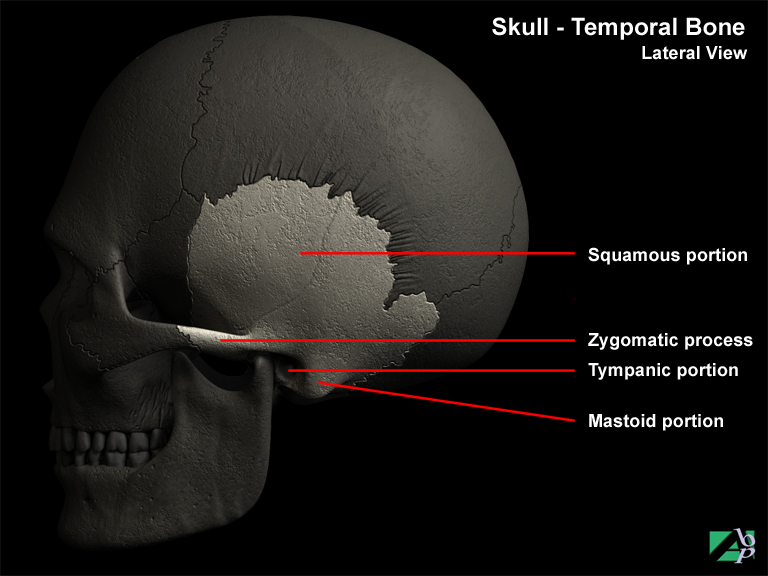
The temporal bones form the lower sides of the cranium. Each temporal bone is made up of four parts, the squamous portion (the flat portion at the sides of the skull), the tympanic portion which contains the external ear, the mastoid portion which is the projection behind the ear lobe and the petrous portion which houses the middle and inner ear.
Occipital Bone
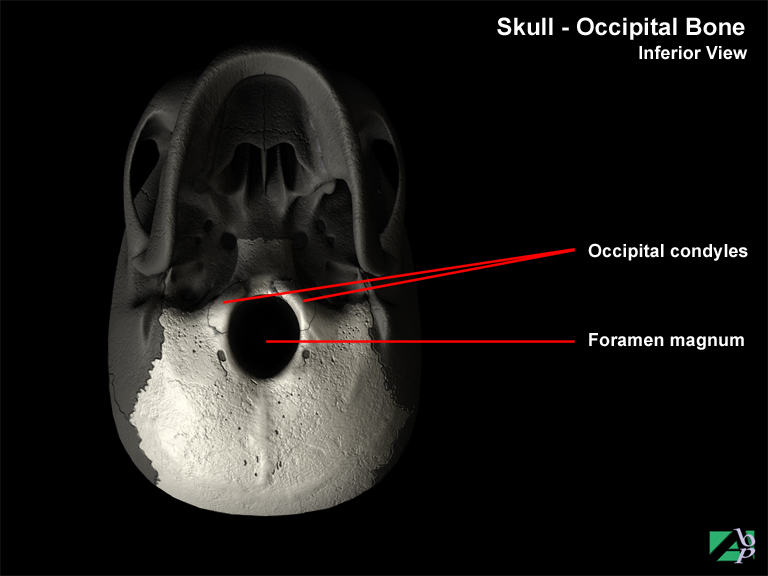
The occipital bone makes up much of the base of the skull. It is fastened to the parietal bones by the lambdoidal suture. The foramen magnum (See Illustration) is the large hole in the occipital bone through which the spinal cord merges with the brain. On each side of the foramen magnum are the occipital condyles (See Illustration) that articulate with the atlas of the vertebral column.
Sphenoid Bone
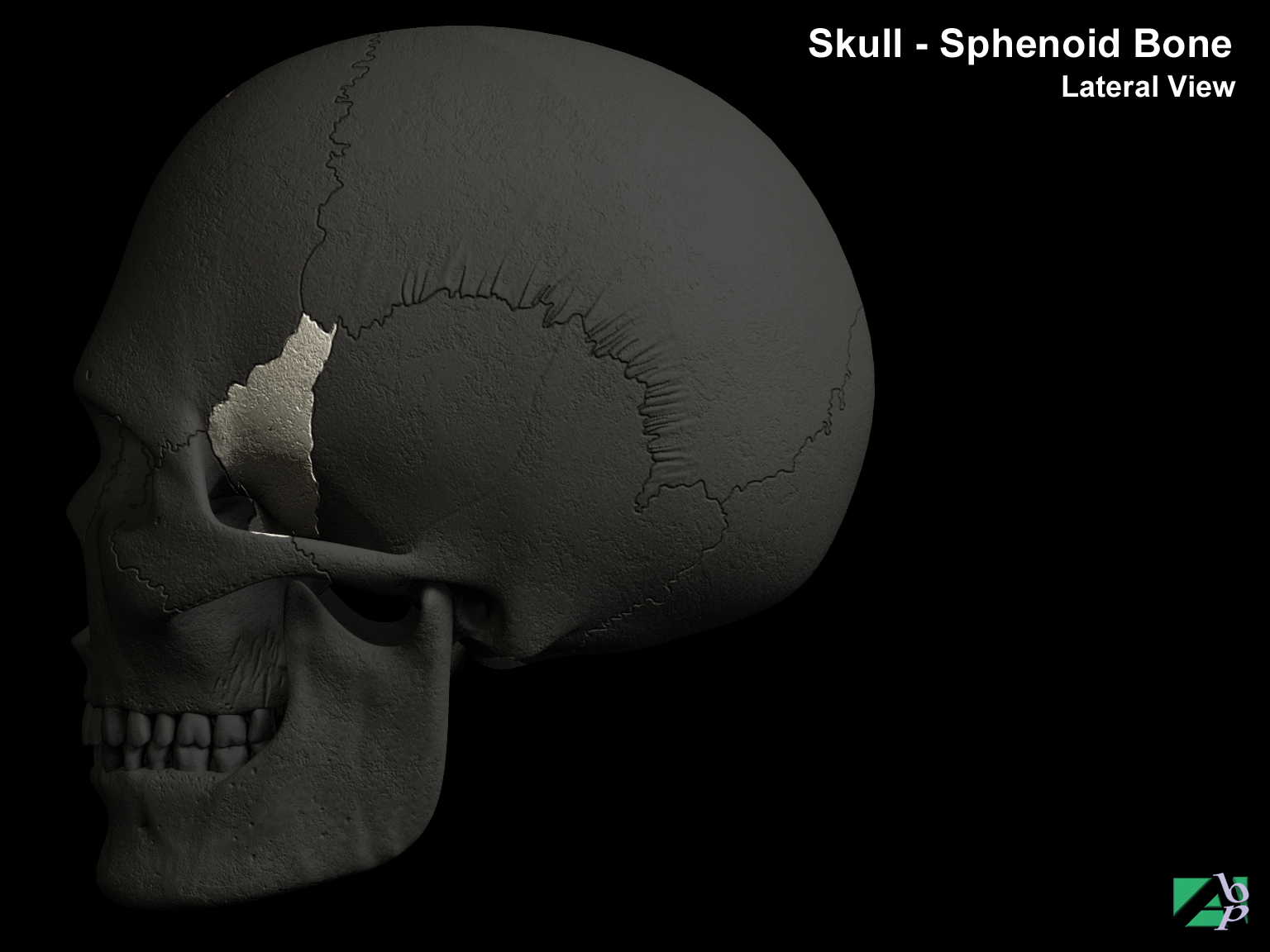
The sphenoid bone forms one third of the floor of the cranium. The ethmoid and frontal bones in front and the temporal and occipital bones at the back surround it. In the center of its inner surface is a depression that houses the pituitary gland.
Ethmoid Bone
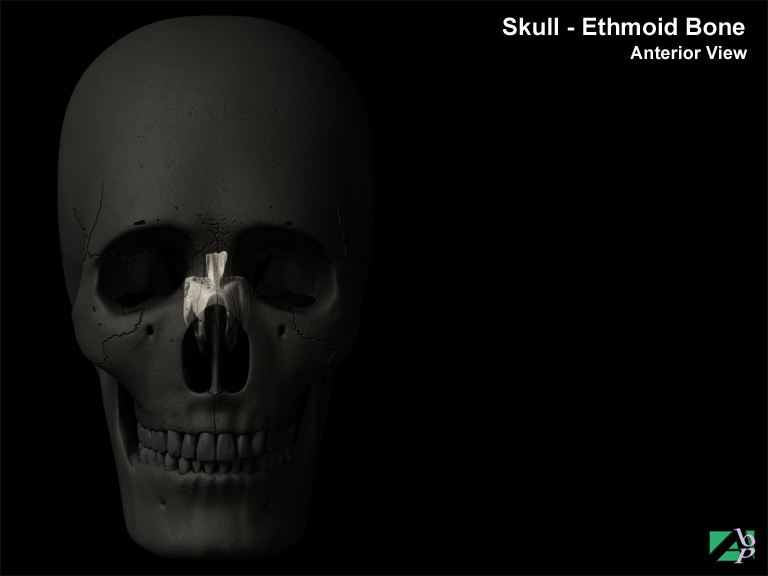
This bone is located in the anterior portion of the floor of the cranium between the orbits where it forms the roof of the nasal cavity.