Stomach
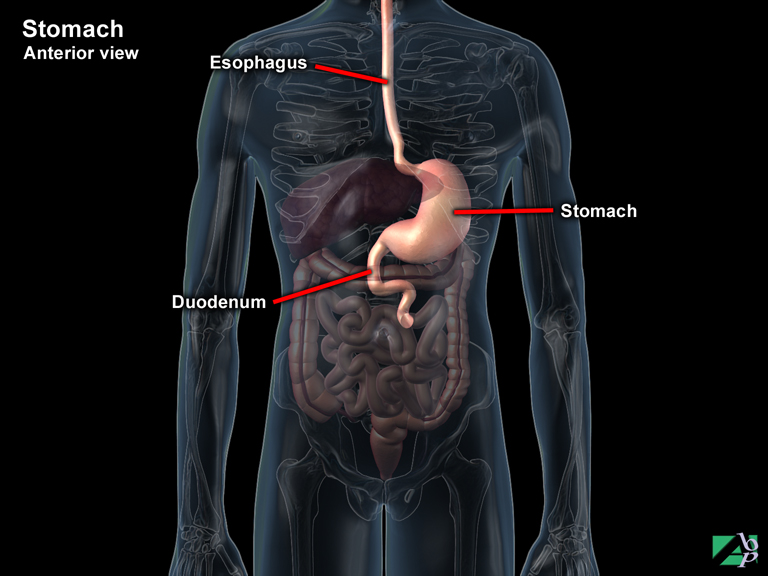
The stomach is a muscular sac like organ located between the esophagus and the small intestine; it serves as temporary receptacle for food. It has two openings. At the top where it joins the esophagus the opening is called the cardiac opening. At the bottom where it empties into the duodenum the opening is called the pyloric opening, or pyloric valve. The walls of the stomach are composed of four layers or tunics. The outermost layer is the peritoneal layer, the next underlying layer is the muscular coat, the next the submucous layer and the innermost layer is the mucous layer. The muscular layer is also composed of layers, three in all. The mucous layer or gastric mucosa is lined with many thousands of gastric glands that secrete a juice known as gastric juice, which is composed primarily of hydrochloric acid. The gastric juices convert the food into a semi-liquid state known as chyme, which is then passed into the duodenum. The stomach is capable of gross alterations in size depending on the position of the body and the amount of food inside. Food enters the stomach from the esophagus through the cardiac opening or sphincter and remains there until modified by the gastric juices. The duodenum opening, the pyloric valve, remains closed until this process is complete. The stomach functions under the autonomous nervous system and there is no control of it by the central nervous system