Pelvis
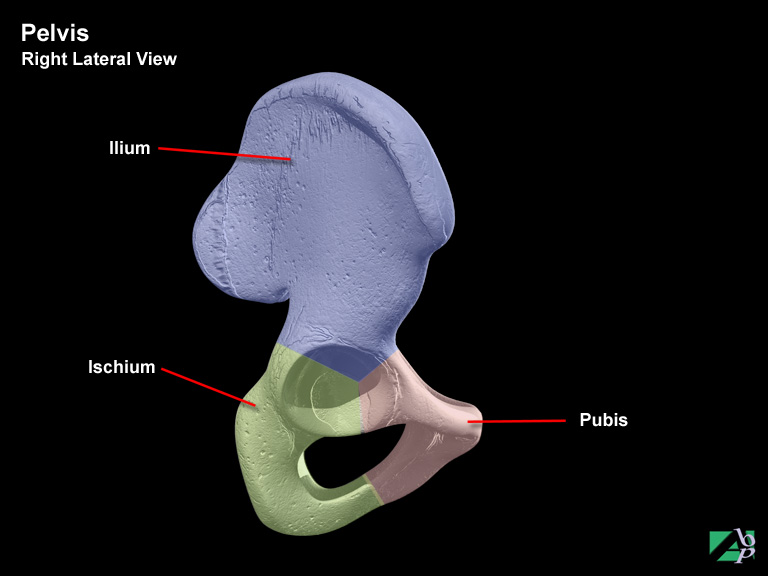
The pelvis is formed by two hipbones called ossa coxa, which are united at the rear by the symphysis pubis. It is attached posteriorly to the vertebral sacrum and coccyx. The pelvis, or pelvic girdle supports the weight of the body and provides protection for the lower abdominal viscera and the reproductive organs. Each ossa coxa comprises three separate bones, which fuse together in adulthood. These bones are the ilium, ischium and pubis. On the side of the ossa coxa where the three bones fuse is a large circular depression, the acetabulum, which articulates with the head of the femur to form the hip joint. The ilium is the largest of three bones and is at the top of the ossa coxa. It has a crest and four spines for muscle attachments. The iliac crest is the prominent or protruding part of the hipbone. The spines are named by their position i.e., anterior superior iliac spine, anterior inferior iliac spine, posterior superior iliac spine and posterior inferior iliac spine. Below these spines are roughened irregular surfaces that serve as attachments for the sacroiliac ligament and gluteal muscles. These are the iliac fossa, iliac tuberosity and gluteal lines. Behind and below the ilium is the ischium. This is comprised of a spine, a sciatic notch, a tuberosity (a bony eminence), a ramus (an extension of bone) and an obturator foramen (opening). The pubis is the lower portion of the ossa coxa and forms the joint between the two ossa coxa known as the symphysis pubis. It comprises a body, and two rami known as the superior ramus and inferior ramus