Pancreas
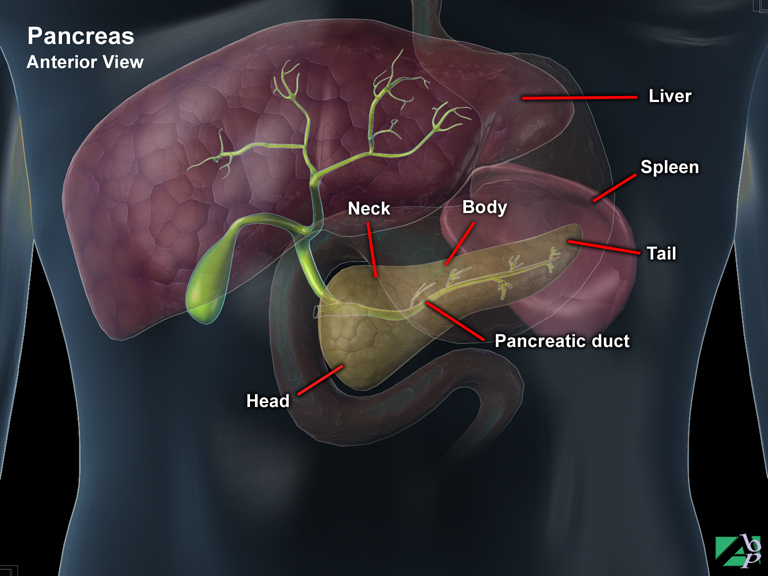
The pancreas is located below the stomach between the liver and the spleen and behind a portion of the large intestine, roughly at the level of the twelfth thoracic vertebra. It is approximately 12.5 centimeters (5 inches) long and 2.5 centimeters (1 inch) thick. It is comprised of four sections: a head, neck, body and tail. The pancreas is part of the endocrine system i.e., part of the glandular system. Its function is vital to the metabolic processes of the body. Its secretions are essential to intestinal digestion and to insulin production that enables the body to absorb and metabolize (transform) glucose. The pancreas has two separate functional systems known as the pancreatic exocrine system and the pancreatic endocrine system. The pancreatic exocrine system produces three enzymes that pass through a duct system and which are secreted into the duodenum, this is referred to as pancreatic juice. This juice contains water, bicarbonate and a variety of digestive enzymes that are used by the duodenum to digest food passed through by the stomach. About 98% of the pancreas's cell tissues are engaged in production of these digestive enzymes. The pancreatic endocrine system functions to produce insulin and other hormones. The insulin producing cells are located in an area known as the islets of Langerhans. Insulin regulates the body's uptake of glucose