Liver
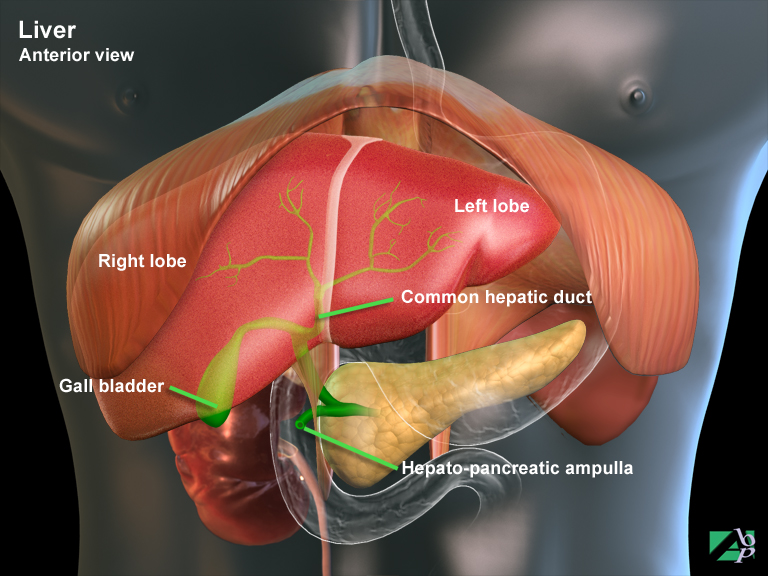
The liver is the largest of the body's internal organs and in an adult weighs about 1.3 kilograms. It is located in the upper region of the abdomen below the diaphragm and spans the entire width of the abdominal cavity from front to rear. The lower regions of the liver are in contact with the right kidney and the stomach and colon. It is attached to the abdominal wall and held by ligaments. The liver's general purpose is filtration and storage of blood, secretion of bile, excretion of bile pigment and general detoxification. The liver consists of four lobes of unequal size and shape. The basic cells of the liver are called hepatic cells. One of the primary functions of these cells is the production of bile, which is stored in the gallbladder and released into the small intestine. Bile salts emulsify fats, which then allow the fats to be digested by the intestinal enzymes produced by the pancreas. The hepatic cells also assimilate carbohydrates and proteins. They convert glucose to its stored form of glycogen and assist in maintaining a proper level of glucose in the blood. The liver also clears the blood of harmful compounds by removing them from the blood and secreting them into the intestine with the bile. The liver also processes the end products of fat digestion and fatty acids into cholesterol and other substances used by the body. Excess carbohydrates and protein are converted into fat by the liver. Digested proteins in the form of amino acids are broken down further by the liver into glycogen and other compounds. Some essential components of blood are manufactured by the liver, including most of the plasma proteins and blood clotting substances. Additionally the liver stores important vitamins and minerals including vitamins A, D, K and some group B vitamins