Larynx
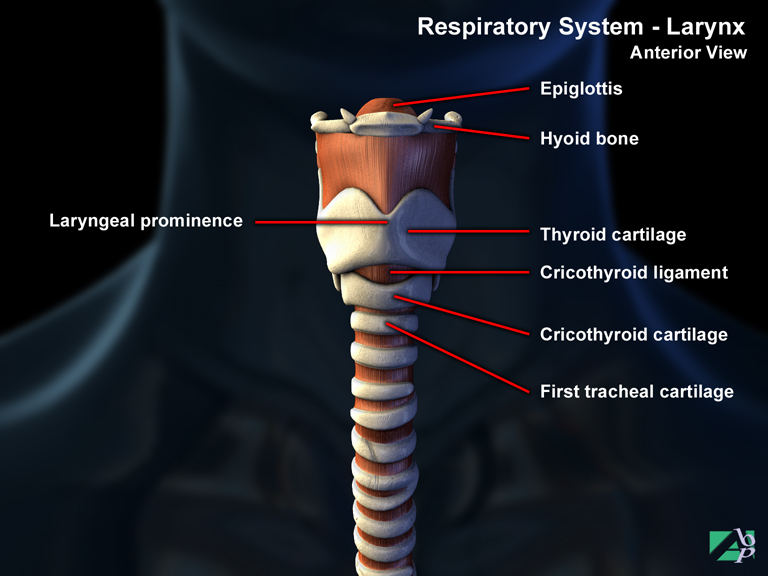
The larynx or voice box joins the pharynx to the trachea. It is approximately in the middle part of the neck, in line with the 4th, 5th and 6th cervical vertebra. The larynx serves two purposes. One is to prevent food and fluid from entering the lungs during swallowing and to allow air through when breathing. The other is to produce sound. The larynx is made up of a framework of cartilages, nine in all. The principal cartilages are the thyroid cartilage (the Adams apple), the epiglottis and the cricoid cartilage. The remaining cartilages form attachment points for the vocal cords. The vocal cords are formed by two bands of connective tissue that stretch from the front to the rear of the larynx. They vibrate when air flows out from the lungs. Changes in the tension of the vocal cords result in a variation in the pitch and quality of the voice. The laryngeal intrinsic muscles regulate tension of the vocal cords. Another group of muscles, the extrinsic muscles, are responsible for elevating the larynx to prevent food from entering during the act of swallowing