Large Intestine
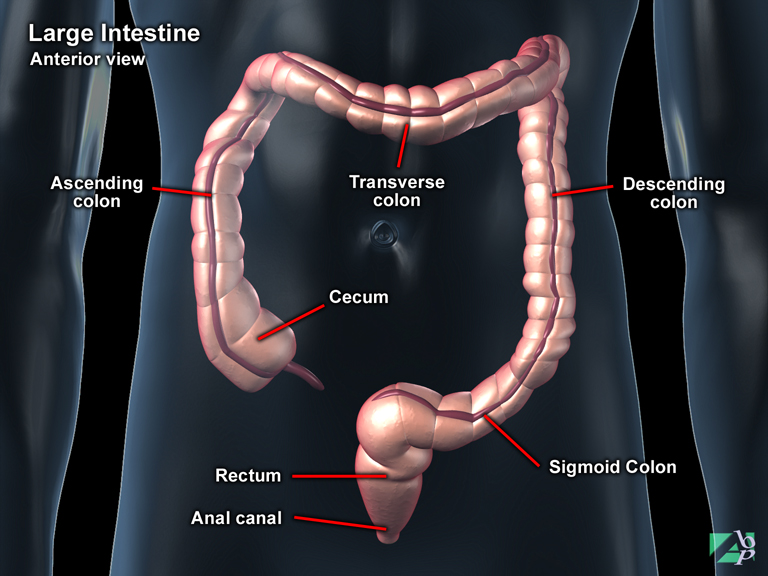
The large intestine is so named not because it is longer than the small intestine (it isn't) but because it is larger in diameter. The large intestine is attached to the abdominal wall by a specialized portion of the abdominal mesentery known as the mesocolon. Like the small intestine, the large intestine has a number of divisions, they are: the caecum, colon, rectum and anal canal. The large intestine begins at the end of the ileum (the terminal end of the small intestine) and rises to just below the liver where it crosses over to the left side of the lower abdomen and descends into the pelvis where it terminates at the anus. The large intestine plays no role in the digestion of food although it does absorb water and electrolytes (irons). It serves to form, store and expel waste matter from the body. The largest section of the large intestine is the colon, which consists of four segments, the ascending colon, transverse colon, descending colon and sigmoid. The first three segments simply describe the direction the colon traverses and the latter (sigmoid) describes the "S" shape taken by the terminal end of the colon. The first portion, the caecum is a dilated pouch that hangs behind a membrane known as the ileocecal valve, which serves to prevent the backflow of digested material. At the terminal end of the sigmoid is the rectum and anal canal; the anus is the external opening of the anal canal