Cerebellum
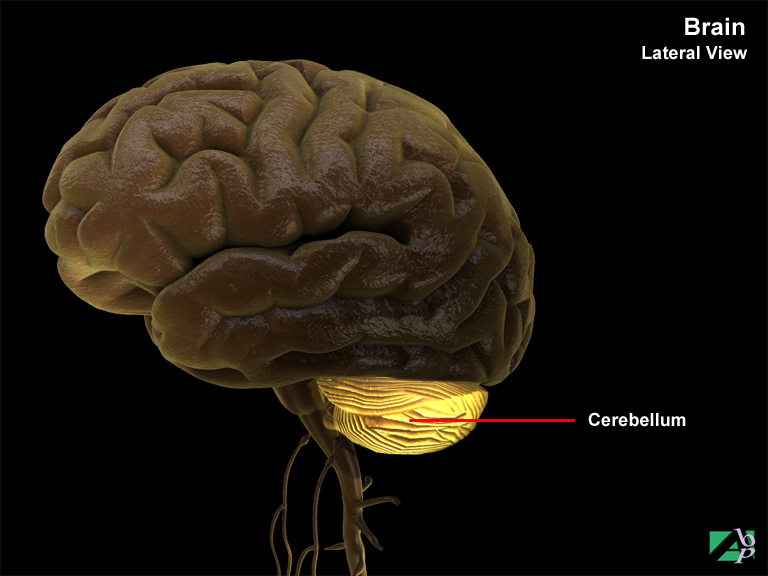
The cerebellum (or as sometimes referred to as the little brain) is the second largest structure of the brain and occupies the inferior and posterior aspects of the cranial (skull) cavity. The cerebellum consists of two hemispheres and a central constricted area called the vermis. Like the cerebrum, the cerebellum has a thin outer layer of grey matter, called the cerebellar cortex and a thick deeper layer of white matter. Three paired bundles of nerve fibers called cerebellar peduncles support the cerebellum and provide it with tracts for communicating with the rest of the brain. The principle function of the cerebellum is coordinating skeletal muscle contractions. Impulses for voluntary muscle movement originate in the cerebral cortex and are coordinated by the cerebellum. The cerebellum constantly initiates impulses to selective motor units for maintaining posture and muscle tone